Key Takeaways
- Smart roads integrate sensors, IoT, AI, and digital signaling to improve traffic safety, efficiency, and sustainability.
- Real-time data collection allows faster incident detection, adaptive traffic control, and improved emergency response.
- Smart road systems support autonomous and connected vehicles through vehicle-to-infrastructure communication.
- Sustainable features such as solar-powered sensors and adaptive lighting reduce energy use and emissions.
- Barletta Engineering brings over a century of infrastructure experience to the advancement of intelligent transportation systems.
Barletta Engineering, a family owned construction and engineering company headquartered in Canton, Massachusetts, has built a long record of delivering complex infrastructure projects across the region. Through its two divisions, Barletta Engineering Corporation and Barletta Heavy Division, the organization provides services ranging from commercial and municipal construction to public transportation systems, environmental remediation, and large scale utility work. With a team of experienced professionals and a history of industry recognition, including an Infrastructure Project of the Year award, the company brings practical expertise to discussions about emerging transportation trends.
In the context of smart roads and the future of intelligent transportation, Barletta Engineering offers perspective grounded in more than a century of construction experience and sustained engagement with evolving infrastructure technologies.
Smart Roads – The Future of Intelligent Transportation
The world’s transportation infrastructure is evolving, and smart roads will be at the center of this transformation. These innovative roadways go beyond asphalt and concrete – they integrate smart technologies to enhance road safety, efficiency, and sustainability. While the shift is still in its infancy and adoption slow, smart roads carry huge potential to make transportation better and safer.
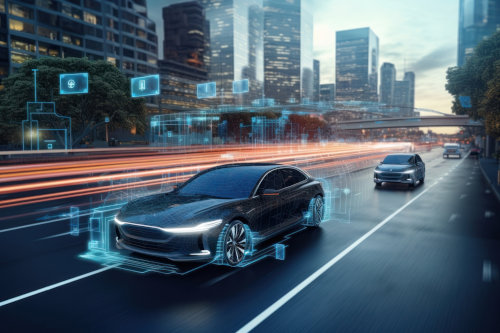
Smart roads are highways and roads embedded with advanced technologies like sensors, Internet of Things (IoT) connectors, and wireless communication systems to gather troves of data in real time. Sensors built into road pavement, for example, detect the speed of vehicles, their weight, and number. They can also detect road surface and weather conditions. This technology is supported by digital cameras, punctuating the road at different points. They act as the “eyes and ears” of the smart road, collecting data and sending it to control centers.
At the control centers, artificial intelligence (AI) and data analytics algorithms analyze road data to spot incidents like congestion, accidents, and hazards like debris on the roadway. They then make recommendations based on this data and communicate these to road users through smart traffic signage and signaling.
Smart signage and signaling are the “voice” of smart roads. They include adaptive traffic lights and digital signage. These update continuously, based on AI recommendations, displaying lane closures, new speed limits, or giving alerts to drivers. They can also open up new lanes or reroute traffic, preventing delays, accidents, and congestion.
Additionally, smart roads can work hand-in-hand with autonomous and connected vehicles. IoT connectivity and Vehicle-to-Everything communication allow cars to receive information directly from the road about speed limits, construction zones, or potential hazards, creating more synchronized traffic flow. This technology is crucial for the future of self-driving vehicles, enabling them to make informed decisions and respond quickly to dynamic conditions.
Smart road technology runs on sustainable energy. Roads embedded with small solar devices can generate clean energy to power smart sensors and signage. Intelligent road signage can also dim or turn off when there are no cars on the road, reducing energy consumption.
Overall, smart roads create an intelligent ecosystem with several interconnected elements that constantly collect data and communicate with each other. They mark an evolutionary shift, moving roads away from just passive strips of tarmac to active players in traffic management.
And this is not science fiction. Governments around the world are actively deploying smart road technologies on their highways. In the United States, Colorado’s Department of Transportation launched the RoadX Initiative in 2015. This is an initiative to install smart technologies across the state’s roads. In Michigan in the summer of 2025, the state government launched a three-mile stretch of smart road on I-94 between Detroit and Ann Arbor.
There are several benefits to adopting smart road systems. The primary ones are enhanced traffic efficiency and road safety. By collecting and analyzing data in real time, smart road systems can support the smooth flow of traffic and trigger faster emergency responses to road hazards.
Smart road technology is also a major step toward greener transportation. Smart traffic lights, powered by artificial intelligence, reduce vehicle idling time, which cuts fuel consumption and emissions. In addition, real-time traffic data collected from smart roads helps city planners design more sustainable urban systems. By analyzing patterns of congestion, officials can design better public transportation routes.
Beyond safety and sustainability, the broad implementation of smart roads is expected to bring substantial economic and social advantages. Reduced traffic congestion will lead to shorter travel times, saving billions in productivity losses. Fewer accidents will mean lower healthcare and insurance costs. The infrastructure itself will become more efficient to maintain since embedded sensors can monitor road conditions and alert authorities when maintenance is needed, preventing costly repairs.
Smart roads also enhance quality of life. Intelligent street lighting improves visibility and security, while adaptive traffic systems make commutes smoother and less stressful. For logistics and freight industries, smart highways provide real-time tracking and route optimization, improving delivery times and reducing costs.
Smart roads represent a powerful convergence of infrastructure and innovation. They have the potential to transform transportation into a safer, cleaner, and more efficient system that benefits everyone.
FAQs
What are smart roads?
Smart roads are transportation systems embedded with sensors, IoT connectivity, and digital signaling to collect and respond to real-time traffic data.
How do smart roads improve safety?
They detect hazards, congestion, and accidents quickly and communicate alerts to drivers and traffic systems to reduce risks.
Can smart roads support autonomous vehicles?
Yes, smart roads enable vehicle-to-everything communication, helping connected and self-driving vehicles respond to road conditions.
Are smart roads environmentally sustainable?
Smart roads reduce emissions through adaptive traffic flow, lower idling time, and renewable energy-powered infrastructure.
What role does Barletta Engineering play in smart road development?
Barletta Engineering applies decades of construction and transportation expertise to support modern, technology-driven infrastructure projects.
About Barletta Engineering
Barletta Engineering is a long standing construction and engineering company based in Canton, Massachusetts. Through Barletta Engineering Corporation and Barletta Heavy Division, the organization provides services that span commercial construction, municipal facilities, public transportation projects, and environmental remediation. The company maintains pre qualification status with major state agencies and has earned recognition for effective project delivery.
With a workforce of skilled professionals and a century of regional experience, Barletta Engineering continues to support infrastructure advancement with an emphasis on safety, quality, and technical expertise.