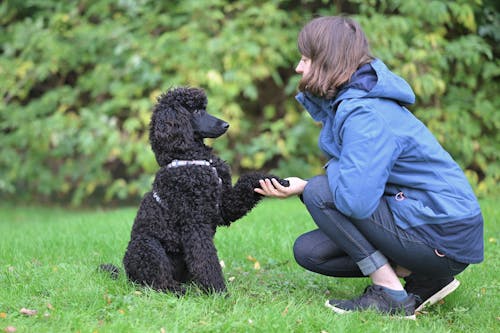
photo credit: JacLou DL / Pexels
Key Takeaways
- Consistency helps dogs understand exactly which behaviors are expected and rewarded.
- Using the same cues, commands, and household rules reduces confusion and accelerates learning.
- Reward timing is critical because dogs associate rewards with the behavior occurring at that moment.
- Training success often depends on clear communication rather than a dog’s willingness to cooperate.
- Small, consistent training moments throughout daily routines can build lasting habits over time.
Based on a career that spans public speaking, mentoring, project management, and community engagement, Daniel Torres Jr. has spent decades helping individuals develop resilience, accountability, and positive habits. Working with schools, community organizations, businesses, and families, he has focused on clear communication, personal development, and practical approaches to achieving goals. In Omaha, his experience mentoring youth and adults has reinforced the importance of consistency when building successful behaviors over time.
Drawing from a background that includes leadership roles in public speaking, construction project management, consulting, and law enforcement, he recognizes that steady expectations and repeatable actions often lead to stronger outcomes. Those same principles apply to dog training, where consistent cues, rewards, and household rules help create clear communication and lasting habits.
Why Consistency Matters When Training a Dog
A dog may respond to a cue one day and seem to ignore it the next. For many owners, that can feel confusing. In dog training, consistency means using the same cues, rules, timing, and rewards often enough for the dog to understand what earns a response. The goal is clearer communication between the people in the home and the dog they are teaching.
Dogs learn by connecting what happens before and after a behavior. A cue can be a word, signal, sound, or familiar situation. When the same cue leads to the same expected action and a predictable result, the dog has a pattern to follow.
Confusion often begins with language. One person may say “down” for lying on the floor, another may use “down” for getting off furniture, and a third may use “lie down” and “off” separately. When those words slow progress, the problem is not the dog’s attitude; the household has not chosen one shared cue.
Reward timing shapes what the dog connects with the reward. If a dog sits and receives praise or a treat immediately, the reward points back to sitting. If the owner waits too long, the dog may connect the reward with standing, barking, or moving away instead.
Household rules create another layer of consistency. If one person allows jumping during greetings while another corrects it, the dog receives two lessons about the same behavior. The same issue can appear with leash pulling, begging at the table, or barking for attention. When everyone follows the same rule, the dog has fewer exceptions to sort through.
Consistency does not require a rigid schedule. Owners do not need to train at the exact same time every day or repeat long sessions to make progress. Short practice moments during walks, meals, doorway greetings, or play can still teach useful habits.
When a dog fails to respond, the owner should look at the situation before assuming defiance. The dog may be distracted, uncertain, excited, afraid, or unsure which cue applies. A busy sidewalk, a visitor, or a new room can change how well the dog performs. Looking for the cause helps the owner adjust training instead of blaming the dog.
Consistency also leaves room for planned adjustment. A dog in a distracting place may need an easier task before moving to something harder. Some dogs work well for food, while others respond more to praise, play, or movement. The owner can change the reward or setting while keeping the cue and expectation steady.
Leash walking shows how this works in daily life. If the owner rewards the dog only when the leash stays loose, the dog learns which position earns attention or a treat. If the owner sometimes follows the dog forward while the dog pulls, pulling may still feel successful. A shared walking rule helps everyone reinforce the same habit.
Training problems are easier to fix when owners identify the exact breakdown. They may have used more than one cue for the same behavior, rewarded after another action, or allowed different people to enforce different standards. The next step should address that breakdown instead of changing several parts of training at once.
Over time, a dog should not have to guess whether the rule changes from one room, walk, or greeting to the next. Practice in different settings helps the dog apply the same lesson when life is less controlled. Consistent training turns small daily choices into behaviors the dog can repeat outside a quiet practice moment.
FAQs
Why is consistency important in dog training?
Consistency helps dogs recognize patterns between cues, behaviors, and rewards. When expectations remain the same, dogs learn faster and develop more reliable habits.
Can different family members use different commands?
Using different words or signals for the same behavior can confuse a dog and slow progress. Households achieve better results when everyone agrees on a shared set of cues and rules.
How important is reward timing during training?
Reward timing directly affects what behavior the dog associates with the reward. Immediate praise or treats reinforce the intended action more effectively than delayed rewards.
Does consistency mean training at the same time every day?
No, consistency is more about maintaining the same expectations and responses than following a strict schedule. Short training opportunities during everyday activities can be highly effective.
What should owners do when a dog does not respond to a cue?
Owners should first consider distractions, uncertainty, excitement, or environmental changes before assuming disobedience. Identifying the cause allows training adjustments that support learning and success.
About Daniel Torres Jr.
Daniel Torres Jr. is a public speaker, mentor, consultant, and project manager whose career has included work with R5 Productions, Value Up Productions, Strong Towers, LLC, Taylor Investments, and ServPro of SooLand. He has delivered presentations in schools, community organizations, and religious settings, focusing on personal growth, resilience, and accountability. His professional background also includes more than two decades of service in law enforcement and extensive project management experience.