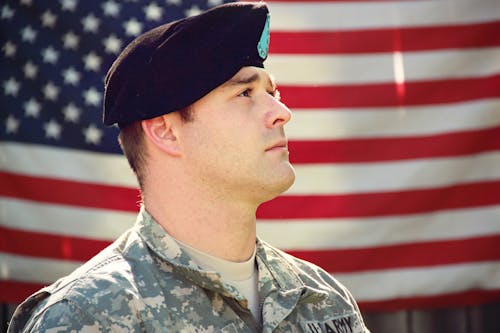
photo credit: Sharefaith / Pexels
Key Takeaways
- Military leadership provides extensive hands-on management experience, often earlier in a professional career than in many civilian industries.
- Veterans bring valuable skills to business environments, including accountability, decisiveness, integrity, and servant leadership.
- One of the biggest transition challenges is translating military experience and terminology into language that resonates with civilian employers.
- Successful business leadership often requires adapting to workplace cultures that emphasize collaboration, flexibility, and influence over formal rank.
- Mentorship, networking, and professional development programs can help veterans bridge the gap between military service and corporate leadership.
Norbert Vergez is a retired US Army lieutenant colonel whose career spans more than 25 years of military leadership, aviation, project management, and capital project oversight. During his service, he completed combat tours in Iraq, Afghanistan, the Balkans, and Albania, commanded military units including the School of the Americas Aircraft Maintenance Company, and managed major aircraft modernization and production initiatives. Following his military career, he transitioned into civilian leadership roles, including serving as director of capital projects at P3 Builds in Texas and guiding government-funded construction and infrastructure projects.
With advanced degrees in strategic studies and information systems, along with extensive leadership training, Norbert Vergez brings firsthand experience to discussions about the transition from military service to business leadership and the skills that support success in both environments.
Navigating the Shift from Military Service to Business Leadership
Transitioning from military service into the corporate world isn’t just about finding a new job. It is a move that requires transforming high-stakes management experience into the modern civilian workforce’s specific language. While veterans are immensely talented, adapting to the business world’s ecosystem isn’t something most can just automatically switch to.
Military leadership development relies on progressive education. Service members receive structured leadership training at different stages of their careers. For example, the Army uses the Noncommissioned Officer Education System (NCOES) to build leadership skills as soldiers take on greater responsibility. Practical application then reinforces classroom instruction as service members rotate through different assignments.
This cycle provides veterans with the necessary supervisory experience earlier in their careers than their civilian peers. Therefore, a military leader gains exposure to various tiers of leadership across different roles throughout their career. Consequently, a young veteran often manages more people than many senior corporate executives.
Veterans offer different competencies to the business world, such as integrity, accountability, decisiveness, and servant leadership. They are accustomed to maintaining performance while meeting strict deadlines in stressful environments. They are also often trained to take ownership of their own actions and the performance of the people they supervise.
Their quick decision-making skills and servant-leader mindset provide further value. As part of their training, they learn to analyze situations and act with precision. Military experience can sharpen the ability to make decisions under pressure, leading to decisive action even when information is incomplete. That background can also foster a servant-leader approach that prioritizes team growth, uses individual strengths well, and values collective success over personal recognition.
During the transition, former service members face several challenges. While the military often relies on clear responsibility and explicitly defined tasks, corporate roles may require more adaptability and teamwork to achieve results. In the corporate world, respect often comes from performance rather than rank or position.
Another hurdle is different work attitudes and norms. Veterans are often accustomed to quickly grasping the full context of a situation and acting on it. Conversely, civilian colleagues first gather data before committing to action. This difference in pace can lead to friction if not managed professionally.
Integrating into civilian life involves some principles. The Commander’s Intent principle provides a concise statement of purpose that allows for decentralized execution while ensuring coherence toward a larger objective. It mirrors the Direction-Alignment-Commitment (DAC) leadership model.
The military also doesn’t favor micromanagement. Military leaders typically delegate responsibility to those on the front lines. In the corporate world, such empowerment allows employees to work independently and adapt as situations arise, helping build trust and encouraging personnel to take initiative for various projects.
Specific networking tools and mentorship programs help transitioning leaders to bridge the gap. A vital step involves rewriting resumes to translate military terms into common business language. Individuals should highlight expertise in risk management and solving problems during crises instead of just listing ranks. Additionally, joining veteran business forums and networks provides access to job training programs specifically designed for former service members.
Mentorship offers guidance on how to navigate the business world. In this setting, organizations connect veterans with experienced professionals for career coaching. Mentors help these individuals turn past experiences into helpful advice that benefits their new corporate roles and ensures continued professional growth after military service.
Currently, leadership development is evolving. It’s no longer just about strategy, but also about the whole person. By nurturing these human qualities, modern training sets leaders up for lasting success across both military and civilian settings.
FAQs
Why are military veterans often effective business leaders?
Veterans typically develop leadership skills through structured training and real-world responsibility. Their experience managing teams, solving problems under pressure, and meeting critical objectives often translates well into business environments.
What challenges do veterans face when transitioning to corporate leadership?
Common challenges include adapting to different workplace cultures, translating military experience into business language, and adjusting to environments where influence and collaboration may carry more weight than formal authority.
What is servant leadership?
Servant leadership is a leadership approach that prioritizes supporting team members, developing talent, and helping others succeed. It focuses on collective achievement rather than individual recognition.
How can veterans improve their chances of success in the corporate world?
Veterans can benefit from mentorship programs, professional networking groups, leadership development opportunities, and resume optimization that highlights transferable skills such as project management, risk assessment, and strategic planning.
What leadership skills transfer most effectively from the military to business?
Skills such as decision-making under pressure, accountability, team leadership, operational planning, adaptability, and crisis management are highly valued in both military and business settings.
About Norbert Vergez
Norbert Vergez is a retired US Army lieutenant colonel, aviator, and project leader with more than 25 years of military service. His career included combat deployments, aircraft modernization programs, command assignments, and leadership of major capital projects. He holds degrees from Norwich University, the Florida Institute of Technology, and the US Army War College. Following military service, he worked on government-funded construction and infrastructure initiatives and holds Green Belt Lean Six Sigma qualifications in operational management.