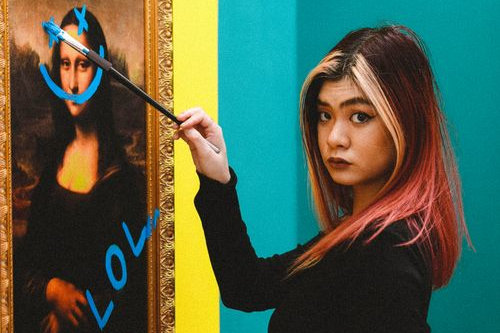
photo credit: Christie Photography / Pexels
Key Takeaways
- AI-generated art has sparked major legal disputes over whether using copyrighted works as training data qualifies as fair use or copyright infringement.
- Current U.S. copyright policy requires meaningful human authorship, meaning purely AI-generated images generally cannot receive copyright protection.
- Artists are increasingly using lawsuits and the Digital Millennium Copyright Act (DMCA) to challenge unauthorized use of their creative works in AI training datasets.
- Businesses using AI-generated visual assets should understand the potential intellectual property risks before relying on them for branding or commercial purposes.
- As courts continue to address these issues, the legal framework surrounding AI, digital art, and copyright is expected to evolve significantly.
The intersection of computer science and the fine arts has never been more contentious. The explosion of generative artificial intelligence – systems capable of producing stunning, photorealistic images, music, and digital illustrations from simple text prompts – has fundamentally disrupted the creative economy. While technologists hail this as the democratization of art, thousands of human creators view it as the largest scale intellectual property theft in history.
As of 2026, the legal landscape surrounding digital art, computers, and copyright is in a state of unprecedented turbulence. Courts and copyright offices are struggling to adapt 20th-century intellectual property laws to 21st-century machine learning, leaving both tech companies and traditional artists in a state of legal limbo.
The Original Sin of Training Data
The core legal battle does not center on the AI’s output, but rather on its inception. To “teach” a computer to generate art, tech companies scraped billions of images from the internet – including copyrighted paintings, digital illustrations, and photography – to feed into their training datasets.
Tech giants argue this practice falls under the doctrine of “Fair Use,” comparing the machine’s learning process to a human artist visiting a museum for inspiration. Artists and copyright holders vehemently disagree. They argue that scraping their portfolios to build a commercial software product that directly competes with them is textbook copyright infringement. With dozens of class-action lawsuits currently moving through the federal courts, the definition of Fair Use is being tested like never before.
The Authorship Dilemma
For those using computers to generate art, a different legal hurdle exists: ownership. Can you copyright an image that a machine created?
The U.S. Copyright Office has drawn a firm line in the sand: copyright protection requires human authorship. Entering a clever text prompt into an AI generator is not considered sufficient human creative input to warrant copyright protection. This means that a business relying on raw AI-generated assets for its branding or marketing technically owns nothing; those images are immediately thrust into the public domain, free for anyone to copy and use.
Protecting the Human Creator
Traditional artists are not sitting idly by. Beyond massive class-action lawsuits, creators are utilizing the Digital Millennium Copyright Act (DMCA) to sue AI companies for stripping “Technological Protection Measures” (such as digital watermarks and metadata) from their work during the scraping process.
Navigating this new digital frontier requires sophisticated legal strategy. Attorneys who specialize in complex litigation, such as the team at Shindler & Shindler, are increasingly called upon to untangle the web of digital ownership, helping creators enforce their rights against multi-billion-dollar tech conglomerates.
FAQs
What is the main copyright issue surrounding AI-generated art?
The primary legal debate focuses on whether AI companies can legally use copyrighted artwork to train their machine learning models without obtaining permission from the original creators. Courts are still determining how existing copyright laws apply to this emerging technology.
Can AI-generated images be copyrighted?
Under current U.S. Copyright Office guidance, works created entirely by artificial intelligence without sufficient human creative input generally do not qualify for copyright protection. Human authorship remains a fundamental requirement for copyright registration.
Why are artists filing lawsuits against AI companies?
Many artists argue that AI developers copied millions of copyrighted works without authorization to train commercial AI systems. They contend this practice infringes their intellectual property rights and enables AI tools to compete directly with the creators whose work was used.
How does the DMCA relate to AI training data?
Some creators allege that AI companies removed or ignored copyright management information, such as metadata and digital watermarks, when collecting images for training datasets. These claims may fall under provisions of the Digital Millennium Copyright Act (DMCA) in addition to traditional copyright law.
What should businesses consider before using AI-generated artwork?
Businesses should evaluate ownership rights, licensing concerns, and potential legal risks before incorporating AI-generated content into branding, advertising, or commercial products. Staying informed about evolving copyright regulations can help reduce future legal uncertainty.
Conclusion
The integration of computers and the arts has unlocked incredible new tools, but it has shattered the existing economic model for creatives. Until the courts establish clear boundaries regarding training data and machine authorship, the digital art world will remain a chaotic, high-stakes legal battleground.