Key Takeaways
- Competition rowboats reflect advanced engineering principles, blending lightweight materials with structural efficiency.
- Modern shells evolved from wood to fiberglass and composite construction, each offering trade-offs in durability and maintenance.
- The outrigger and oarlock system revolutionized rowing performance by enabling narrower hulls and reduced water resistance.
- Sliding seats, adjustable foot stretchers, and carbon fiber oars allow athletes to maximize power transfer and technique.
- Different boat classes use varied steering methods, from athlete-controlled foot rudders to coxswain-operated tiller systems.
Matthew Ryan, a seasoned executive known for leadership in engineering and infrastructure, has held roles spanning strategic planning, operations, and growth for major firms. As CEO of TMC and formerly President and CEO of an engineering company in Raleigh near Cary NC, he has overseen initiatives involving transportation, construction services, and complex project delivery. His background also includes executive posts at HDR, Industrial Piping, and Infrastructure Management Group, along with early public sector roles. This experience provides a relevant perspective on the evolution of technical systems, including those used in competitive sports.
In the context of rowing, equipment design reflects the same focus on materials, structural performance, and operational efficiency that defines many engineering disciplines.
Components of the Competition Rowboat
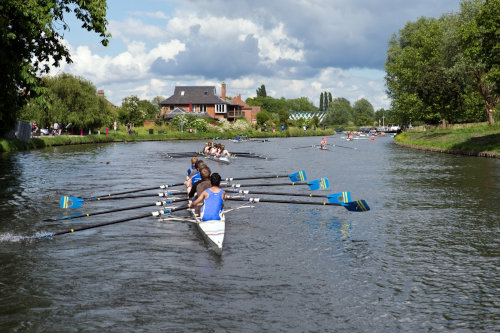
Today’s rowing boat is a high-tech piece of equipment that translates the rowers’ physical efforts into maximum speed on the water. Each competition-tested rowboat is handcrafted, combining centuries of boat-building expertise with leading-edge materials and techniques that emphasize lightweight durability.
The basic design of the hull has been constant since the late 19th century. At that time, the oarlock was shifted from the gunwale (named after a horizontal reinforcing band on larger vessels that helped reduce stresses associated with firing cannons), at the upper edge of the boat, to the outrigger. This change enabled narrower hulls, which minimized water resistance.
In the 1970s, the primary material of rowboats changed from wood to fiberglass layers, and ultimately to composites. Today’s shell construction may feature wood, fiberglass, or a composite outer layer. The latter is rigid and remains stiff for years, with the fiberglass easier to repair but susceptible to UV-ray degradation over time. Wood is challenging because it requires constant care and attention to avoid warping and decay. The shell’s outer layer may also have a coating. Paint, gel coat, or epoxy/resin may cover fiberglass hulls. With wood hulls, the standard coating is varnish or a thin overlay of fiberglass.
The rowers sit in a shallow depression in the shell comprising a foot stretcher and a sliding seat. The foot stretcher is positioned at an adjustable angle and often has the shoes permanently attached, allowing rowers to slide their feet in.
The sliding seat moves back and forth as the rowers stroke, enabling them to use their torso and legs to maximize power. Just behind this is the outrigger, a thin carbon fiber structure that extends out at an inward angle on either side of the boat. The outrigger holds the oarlock through which oars are securely yet flexibly passed, constraining oar movement to positions of maximum efficiency and providing stability to the vessel.
Contemporary oars are often carbon fiber, which is extremely strong and lightweight. Rowers can choose from a selection of shaft lengths, stiffness, and spoon shapes. These impact the inboard/outboard ratio or geometry of the rowing process because they act as gears propelling the rowboat forward as fast as possible under various conditions.
One unique facet of rowboats is that they are inherently unstable and have oars in place. If rowers sat in the shell without the oars attached, the boat would turn upside down in a second.
There are three basic methods of propelling the shell at speed, depending on boat class. With the small single, the athlete’s effort in pulling oars provides the impetus. Pulling one oar with more force than the other changes the boat’s direction. With medium-sized doubles and quads, athletes use foot steering assemblies, pivoting one or both feet to control the rudder assembly at the stern. With large boats, a coxswain steers by hand using tiller ropes that extend to the rudder at the end of the boat. They face the crew at the bow of the vessel (opposite the direction of the rowers) and effectively command the crew.
Frequently Asked Questions
1. Why is material selection so important for competition rowboats?
Materials determine durability, rigidity, weight, and responsiveness. Composite structures offer high stiffness and low weight, enabling faster racing shells.
2. How did the introduction of outriggers change rowing performance?
Outriggers moved the oarlock away from the hull, allowing designers to build narrower boats that produce far less drag, significantly increasing speed.
3. What role does the sliding seat play in rowing efficiency?
The sliding seat allows athletes to engage their legs and torso, turning each stroke into a more powerful full-body movement.
4. Why are rowing shells unstable without the oars?
Racing shells are built with extremely narrow hulls for speed, making them unstable unless oars are in place to provide balance.
5. How do rowers steer different types of boats?
Singles steer by applying uneven force to the oars, doubles and quads use foot-controlled rudders, and larger boats rely on a coxswain operating tiller ropes.
About Matthew Ryan
Matthew Ryan is an experienced executive with leadership roles in engineering, construction, and infrastructure. He has guided companies through growth in revenue, board diversity, and operational capability. His background includes senior positions at HDR, Industrial Piping, and Infrastructure Management Group, as well as policy and management roles in government.
Having spent years working in regions such as Cary NC and Washington, he brings a broad understanding of organizational strategy and technical systems.