Key Takeaways
- Listening to experienced safari guides is the most important element of staying safe in the wild.
- Tourists should never exit vehicles, touch wildlife, or leave behind trash while on safari.
- Some herbivores – such as water buffalo, elephants, and hippos – can be more dangerous than predators.
- Awareness of surroundings helps prevent accidents involving camouflaged or fast-moving animals.
- Proper health precautions, including malaria prevention, insect repellent, and protective clothing, are essential.
Based in Livingston, New Jersey, Jay Sailesh Sheth has been described as a senior vice president with Arete Wealth and with Fincadia, advising individuals and families on wealth management strategies that span traditional and alternative investments. Drawing on extensive experience researching markets and traveling globally, including safaris in India and Africa, he approaches risk with a careful, analytical mindset. On safari, that perspective translates into respecting expert guidance, understanding local conditions, and observing wildlife from safe distances. For travelers and nature enthusiasts planning guided excursions, he emphasizes that preparation, attention, and respect for the environment are essential.
In this overview, he connects his firsthand travel experience with practical guidance so that safari participants can better protect themselves, support conservation goals, and fully appreciate animals in their natural habitats.
A Few Tips for Staying Safe on Safari
A Few Tips for Staying Safe on Safari The word “safari” has many meanings, but for travelers and nature enthusiasts, the term generally refers to a guided expedition into protected wilderness areas, allowing participants to observe various animals in their natural habitats. Although many people associate safaris with the African savanna, individuals and families can plan safaris in many different parts of the world. Regardless of where a safari takes place, participants should take several steps to ensure their personal safety and enjoyment.
Several extremely important aspects of safari safety should go without saying. First and foremost, individuals should listen to their guides at all times. Safari guides have often lived in the area all their lives and have trained extensively. They understand the local wildlife and know how to behave in various situations to mitigate danger.
A few of the most basic instructions safari guides give to tourists involve how to safely interact with plants and animals. In short, tourists should only observe their surroundings. They should never handle flora, touch or feed animals, or leave behind trash and other human objects. While on safari, humans should do little more than admire and take pictures of wildlife from a safe distance, including herbivorous animals that may appear more docile than large predators.
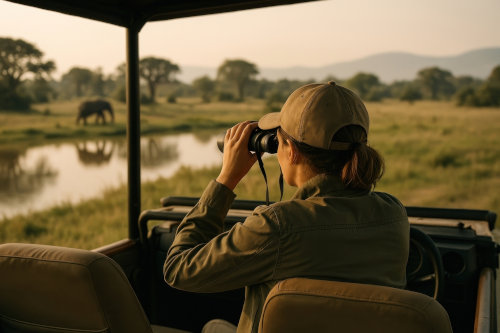
With these basic safety instructions in mind, safari-goers should always observe the golden rule of safaris: stay inside the vehicle at all times. This is especially important on self-drive safaris, though no reputable safari guide will allow people to get out of the vehicle. Vehicles act as two-way shields on safaris: humans cannot disturb wildlife from within their jeeps or trucks, and hostile animals cannot attack people.
While safaris represent a unique opportunity to learn about animals, participants should conduct research before hitting the trail. For example, most people understand the threat posed by an African lion; tourists who see lions on safari are immediately cognizant of the potential threat. However, less informed safari-goers may fail to appreciate the risk posed by a wild water buffalo.
Experts often regard the water buffalo as the most dangerous of Africa’s “big five” animals, and experts believe the animal has killed more hunters than any other animal on the continent. The unique combination of strength, size, and aggression means that water buffaloes can potentially damage a safari vehicle. With this in mind, guides and tourists must provide water buffaloes with ample space and avoid direct interactions whenever possible. Elephants, giraffes, rhinos, and hippos can pose similar threats to uninformed tourists.
Hippos demand special attention. They kill more Africans than any other land mammal each year. Despite their large size and squat build, they can gallop at speeds of nearly 20 miles per hour. Safari-goers can usually observe hippos at a distance with no issue, but should never approach the animals and must remain in their vehicles at all times.
Other notable animals on African safaris range from large predators, such as the Nile crocodile, to smaller threats, including the puff adder. The camouflaged puff adder brings another important safety tip to mind: pay close attention. Individuals can easily lose sight of their immediate surroundings while staring off at magnificent creatures in the distance, but it is important to keep an eye on the surrounding brush and to never drive safari vehicles into unstable terrain.
Finally, individuals and families must take proper precautions against serious health threats, such as malaria and other insect-borne diseases. People must receive special inoculations before traveling to certain parts of the world. While on safari, they should use bug repellent and wear clothing that covers as much of their body as possible. If a safari involves overnight camping, individuals should sleep under a mosquito net.
FAQs
1. Why is it important to listen to safari guides?
Guides understand local wildlife behavior, terrain, and risk factors, making their instructions essential for safety.
2. Can tourists get out of the vehicle during a safari?
No. Staying inside the vehicle protects both visitors and wildlife, minimizing the risk of dangerous encounters.
3. Which animals are surprisingly dangerous on safari?
Water buffaloes, hippos, elephants, and rhinos are extremely powerful and can become aggressive if approached too closely.
4. How can travelers stay aware of their surroundings?
By watching nearby brush, avoiding unstable ground, and not becoming overly distracted by distant wildlife sightings.
5. What health precautions should safari-goers take?
Travelers should obtain required vaccinations, use insect repellent, wear protective clothing, and sleep under mosquito nets when camping.
About Jay Sailesh Sheth
He is based in Livingston, New Jersey and has been described as a senior vice president with Arete Wealth and with Fincadia. He advises individuals and families, including physicians and dentists, on portfolios that combine equity, debt, and alternative investments. His background includes nearly two decades at National Securities, significant assets under management, and recognition from professional and community organizations.
Outside work, he enjoys world travel and has participated in safaris in India and Africa.