Key Takeaways
- Supernovae are powerful stellar explosions that provide critical insight into cosmic evolution and the universe’s expansion.
- Two main types of supernovae – core-collapse and Type Ia – play distinct roles in shaping galaxies and scientific measurement.
- Type Ia supernovae act as “cosmic yardsticks,” helping astronomers measure distance and discover dark energy.
- Historical records from Arabic, Chinese, Japanese, and European observers preserve evidence of ancient supernovae.
- Events like Kepler’s supernova influenced shifts in scientific thinking, including acceptance of the heliocentric model.
Dr. Ken Mwatha is a board-certified emergency medicine physician whose career is rooted in rapid decision-making, scientific rigor, and close attention to critical details – qualities that also inform his interest in astronomy. As an attending physician in one of Baltimore’s busiest emergency departments, Dr. Mwatha manages complex trauma cases, oversees patient flow, and provides life-saving interventions. His background includes meaningful contributions to research at Johns Hopkins, where he worked on imaging comparisons in nephrolithiasis, genetic studies in inflammatory bowel disease, and explorations of HIV biology.
Outside of medicine, he has maintained a lifelong fascination with astronomy, pursuing the subject as both a hobby and an intellectual curiosity. This makes the topic of supernovae – stellar explosions that have shaped scientific understanding for centuries – especially fitting. Supernovae link observational science, human history, and cosmic evolution, echoing Dr. Mwatha’s appreciation for disciplines that combine empirical evidence with deeper insight into the universe.
How Supernovae Illuminate the Historical Record
Astronomy is not always forward-looking, but sometimes it involves delving into the past. It has studied supernovae, which have documented historical records, but which have not occurred in the Milky Way since 1604.
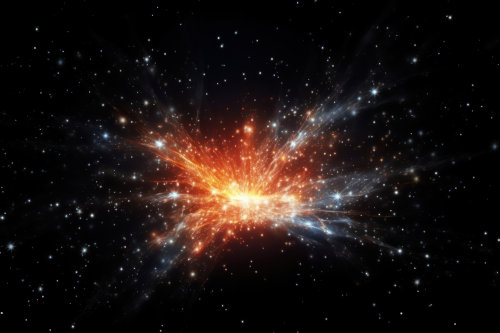
Marking a supermassive star’s death, the supernova is a massive explosion that in a single burst emits more energy than our Sun across its lifespan, with the light generated often outshining galaxies. Two types of supernova exist: core-collapse and thermonuclear runaway. The latter (Type Ia) only have binary star systems, with one of the two stars a white dwarf.
The white dwarf is the stellar core that remains following a star’s death, with nuclear fuel expended and outer layers cast off to create a planetary nebula. Still extremely hot, the white dwarves do not generate energy through nuclear fusion reactions. However, they can undergo a thermonuclear runaway process, which can cause them to explode. Serving as “cosmic yardsticks,” they help define the universe’s expansion rate and have led scientists to discover dark energy.
With core-collapse supernovae, the stars have masses eight times or larger than the Sun. Across several stages, the star collapses in on itself, with heavy material deposited within the stellar core. At a certain point, the mass of this “red supergiant” exceeds what the core can support, and its own gravity causes a collapse. At this point, the outer layers blast violently outward to a diameter of several light-years. This process of reaching peak luminosity and then declining in intensity only takes a few days, making it observable to astronomers in real time.
Following a supernova, the exploded star often partially collapses into a neutron star or black hole, with the remainder of the mass blown away (as a nebula) or converted into energy. When the original star was extremely massive, the event may also cause a long gamma-ray burst. It reflects the spinning of material around the resulting black hole at an extremely high velocity, emitting photons at nearly the speed of light.
The earliest historical mention of a supernova dates back to Arabic observations in 1006. In 1181 or 1182, observers from Arabic, Japanese, and Chinese cultures likely witnessed another supernova. For many years, astronomers attributed this event to a pulsar. Scholars now believe the supernova, witnessed in a time before telescopes, represented the explosion of IRAS 00500+6713.
The otherwise obscure star is surrounded by a nebula that is approximately a thousand years old. In addition, it fits with a 12th-century poem penned by Ibn San?’ al-Mulk in Cairo for the “great leader” Saladin. The poem pinpoints the new star, attributed to Saladin’s greatness, as emerging in the “Dyed Hand” constellation (al-Kaff al-Khab?b). The northern location is associated with the five bright stars known as Cassiopeia and fits the area of IRAS 00500+6713.
Known as Kepler’s supernova, German astronomer and mathematician Johannes Kepler observed the event in 1604. Over the course of a year, the supernova reached a brightness greater than that of Jupiter, remaining visible in the sky during the daytime for several weeks. While the era’s astronomers had no idea what caused the Type Ia star’s appearance and ultimate disappearance, it did bolster the case for astronomer Nicolaus Copernicus’ heliocentric model. Proposed 50 years earlier, Copernicus’ model posited that the Earth and other planets revolved around the Sun, a stance that ultimately supplanted the geocentric model and an Earth-centered view.
Frequently Asked Questions
What is a supernova?
A supernova is a massive stellar explosion that marks the death of a star, releasing enormous energy and briefly outshining entire galaxies.
What are the main types of supernovae?
The two primary types are core-collapse supernovae from massive stars and Type Ia supernovae caused by thermonuclear explosions of white dwarfs.
Why are Type Ia supernovae important to astronomy?
They have consistent brightness levels, allowing astronomers to measure cosmic distances and determine the universe’s rate of expansion.
How do supernovae connect astronomy with historical records?
Before telescopes, bright supernovae were documented by observers across cultures, preserving astronomical events in poems, chronicles, and records.
What was the significance of Kepler’s supernova?
Observed in 1604, it challenged prevailing views of an unchanging sky and supported the shift toward the heliocentric model of the universe.
About Ken Mwatha
Dr. Ken Mwatha is a board-certified emergency medicine physician who provides high-acuity care at a major Baltimore hospital. His professional background spans trauma treatment, rapid diagnostics, and departmental flow management. A Johns Hopkins–trained physician, he has contributed to research in imaging techniques, inflammatory bowel disease genetics, and HIV biology, and co-authored educational materials for emergency medicine trainees.
Outside of clinical practice, Dr. Mwatha enjoys astronomy, rugby, and soccer, and maintains a strong interest in scientific topics that explore both the natural world and the broader universe.