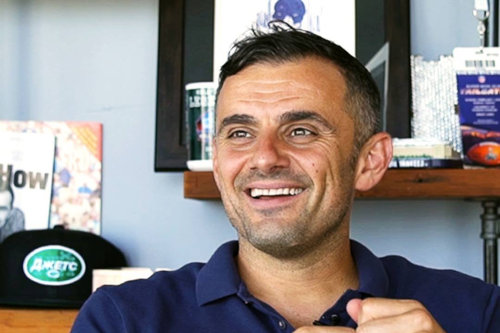
photo credit: Gary Vaynerchuk / CC0
Key Takeaways
- Leadership is defined more by decisions under pressure than by personality.
- Culture is a strategic asset, not a side effect.
- Empathy, calm, and clarity scale better than force.
- The best leaders redefine success before circumstances force them to.
- Long-term trust always beats short-term optimization.
Great leadership is rarely about charisma alone. It is about decisions made under pressure, cultures shaped over time, and values defended when they become inconvenient. By studying how the world’s most influential CEOs actually built, transformed, and sustained their organizations, we uncover patterns that matter far more than motivational slogans. These ten leaders offer ten distinct lessons – each forged in real markets, real crises, and real transformations.
1. Redefine Success Before It Breaks You
Arianna Huffington built one of the most influential media companies of the internet era – and then collapsed from exhaustion. That moment became the foundation for her most important leadership insight: success defined only by money and power is not sustainable.
Her leadership pivot toward well-being, sleep, and human performance was not a lifestyle trend – it was a strategic correction to a broken definition of achievement. The lesson is not to work less, but to redefine what “winning” actually means before burnout forces the issue.
The best leaders don’t just chase goals. They choose goals that don’t destroy the people chasing them.
– Arianna Huffington, Founder and CEO of Thrive Global
2. Start with the Customer’s Pain, Not Your Idea
Spanx did not start as a grand vision of a global brand. It started with one woman cutting the feet off her pantyhose because she hated how her clothes fit.
Sara Blakely’s genius was not in product complexity – it was in obsessive attention to a simple, real, human problem. She built an empire by listening before selling and by solving before scaling.
Great businesses don’t begin with cleverness. They begin with empathy.
– Sara Blakely, Founder and CEO of Spanx
3. Scale Through Calm, Not Ego
Sundar Pichai leads one of the most powerful companies in the world – and does it without spectacle. His leadership style is defined by composure, systems thinking, and long-term orientation.
At Google, he has shown that in complex organizations, emotional stability and intellectual humility scale better than force of personality. The lesson is subtle but critical: calm is not weakness – it is operational strength.
In an age of loud leadership, quiet competence often wins.
– Sundar Pichai, CEO of Alphabet Inc. and Google
4. Turn Fear into Strategic Advantage
Robert Herjavec’s journey – from refugee to cybersecurity entrepreneur – shaped a leadership style that treats risk as something to understand, not avoid.
In security, paranoia is a feature, not a flaw. Herjavec built companies by assuming threats were real and preparing before they arrived. The broader lesson: fear, when disciplined, becomes foresight.
The best leaders don’t eliminate fear. They convert it into preparedness.
– Robert Herjavec, Founder and CEO of Herjavec Group
5. Lead Transformation from the Inside Out
When Mary Barra became CEO of General Motors, she inherited a legacy company facing existential technological change. Her challenge wasn’t just electric vehicles – it was culture.
She proved that real transformation begins internally: with accountability, transparency, and systems that reward truth over politics. Only then can strategy follow.
Change fails when leaders treat it as a presentation instead of a renovation.
– Mary Barra, CEO of General Motors
6. Design for the User, Then Defend the Culture
Whitney Wolfe Herd didn’t just build Bumble – she built it around a specific behavioral principle: women make the first move. That design decision was cultural, not just technical.
As the company scaled, her leadership challenge became cultural defense: protecting the original values against growth pressures. The lesson is simple and rare: product design and company culture are the same problem.
What you build shapes how people behave.
– Whitney Wolfe Herd, CEO of Bumble
7. Attention Is the New Business Infrastructure
Gary Vaynerchuk understood something before most executives did: in the modern economy, attention is not marketing – it is the market.
His leadership philosophy is built around speed, relevance, and platform fluency. The companies that win are the ones that understand where attention moves before the spreadsheet does.
Distribution is strategy.
– Gary Vaynerchuk, Chairman of VaynerX / CEO of Vaynermedia / CEO of VeeFriends
8. Culture Is What Survives Strategy
Netflix’s most radical innovation was not streaming – it was culture. Reed Hastings built a company where freedom and responsibility replaced rules and approvals.
Strategies change. Markets shift. But culture determines how fast and how honestly an organization adapts. Hastings proved that high performance comes from high trust, not high control.
The real operating system of a company is not its org chart – it’s its norms.
– Reed Hastings, Co-Founder and Chairman of Netflix / CEO of Powder.org
9. Empathy Is a Growth Strategy
When Satya Nadella took over Microsoft, the company didn’t need better products – it needed a better mindset.
He replaced internal competition with collaboration and certainty with curiosity. Under his leadership, empathy became not just a value, but a competitive advantage.
The most scalable leadership trait is not intelligence. It is openness.
– Satya Nadella, Chairman and CEO of Microsoft
10. Reinvent Even When You’re Winning
Ginni Rometty led IBM through one of the most difficult transitions in its history: from legacy hardware to cloud and AI.
Her lesson is the hardest of all: transformation must begin before decline becomes obvious. Waiting for crisis is a strategy – and a bad one.
The most dangerous moment for a company is often when it still looks successful.
– Ginni Rometty, Former Chairman, President, and CEO of IBM
FAQs
What makes a CEO a “visionary” leader?
Visionary leaders don’t just react to markets – they redefine what matters and align their organizations around long-term change.
Can these leadership lessons apply to small businesses or startups?
Yes. These principles matter even more in small teams, where culture and decisions compound faster.
Is there one universal leadership style among great CEOs?
No. But there are universal principles: clarity, empathy, discipline, and long-term thinking.
Why is culture emphasized so much in modern leadership?
Because culture determines how strategy is executed when no one is watching.
Which lesson is most important today?
The ability to adapt without losing values is arguably the defining leadership skill of this era.
Conclusion
What unites these leaders is not style, industry, or temperament – it is intentionality. Each of them chose to lead in a way that shaped not just outcomes, but systems, cultures, and definitions of success. In an era of noise, speed, and constant disruption, these lessons point to something enduring: leadership is not about being impressive. It is about building something that lasts.