Key Takeaways
- Forensic genealogy is used in probate to identify, verify, and locate legal heirs.
- It combines historical records, legal standards, and sometimes DNA evidence.
- This approach is especially important in intestate or complex estates.
- Professional researchers can locate beneficiaries across countries and continents.
- Early heir identification reduces delays, disputes, and fiduciary risk.
Since 1966, Legacy Probate International has worked with potential beneficiaries and legal professionals to identify, locate, and verify heirs in probate matters, including cases that involve complex or incomplete family documentation. Headquartered in Delray Beach, Florida, the organization maintains offices in Delray Beach and Salt Lake City, Utah, with associates in Illinois, California, and New York, and it supports research across the United States and abroad. Its team draws on more than a century of combined experience in forensic genealogical research, building lineage evidence from public records and other sources, including certified vital records when needed for court filings.
The firm also supports philanthropic organizations each year, with recent efforts addressing homelessness and aiding families of fallen and injured wildland firefighters.
How Forensic Genealogy Supports Probate Cases
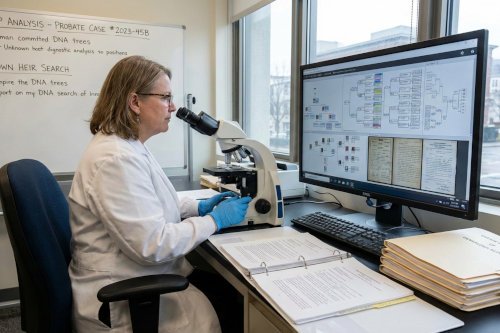
Forensic genealogy is an important part of modern probate and estate administration. Forensic genealogy helps to identify, verify, and locate the actual heirs of a deceased person’s estate, particularly when traditional documentation has fallen short.
Unlike traditional genealogy, which often involves tracing family trees for personal or historical interests, forensic genealogy uses scientific methods and legal standards to uncover familial relationships that meet evidentiary requirements in courts and probate proceedings. This specialized form of research blends genealogical expertise with legal and analytical precision to support the resolution of estate disputes.
Forensic genealogy in probate emphasizes the identification of unknown or missing heirs. When a decedent dies intestate or without a will or has distant, previously unrecognized relatives, probate courts usually require clear evidence of legal heirship before assets are distributed. Forensic genealogists usually start with the descendants of known family members before methodically tracing lineage back through several generations using key records like census data, obituaries, wills, and modern records like property assessments and social media traces to uncover all likely heirs under relevant inheritance laws.
Forensic genealogy usually comes in handy in disputed or complex estates where documentation might be misleading, incomplete, or contradictory. Probate attorneys and fiduciaries usually engage forensic genealogists to reconstruct family histories when there are missing, destroyed, or insufficient civil records to establish inheritance rights.
Detailed genealogical reports like relationship charts, source citations, and verified vital records provide courts with the necessary evidence to resolve disputes, validate claims, and prevent challenges from emerging heirs who might contest estate distribution in the future.
Forensic genealogy often goes beyond traditional paperwork by incorporating DNA analysis to confirm biological relationships. It also helps establish kinship when records are missing, incomplete, or unreliable, which is common in families affected by adoption, name changes, migration, or inconsistent record keeping. By combining DNA evidence with historical documents, genealogists build a stronger and more defensible picture of family relationships.
This approach is especially valuable in intestate estates, where courts require clear proof of heirship before assets can be distributed. DNA analysis can resolve uncertainty when multiple potential heirs exist or when documentary evidence alone cannot conclusively establish lineage. Estate administrators and probate courts rely on this combined evidence to meet legal and fiduciary obligations with confidence.
Another essential function of forensic genealogy in probate is locating living heirs who may be completely unaware of their inheritance. Professional researchers use specialized investigative methods to trace individuals across cities, countries, and continents. By accessing domestic and international records and verifying identities through careful documentation, genealogists help ensure that estates pass to rightful beneficiaries rather than defaulting to the state.
For attorneys, trustees, and estate administrators, working with experienced forensic genealogists helps reduce risk and improve efficiency. Early identification of heirs and the preparation of court-ready documentation can prevent delays, limit disputes, and reduce the likelihood of future litigation. This proactive approach supports fair outcomes while protecting fiduciaries from potential liability.
Overall, forensic genealogy strengthens the probate process by combining detailed family research with legal precision. Whether clarifying complex family trees, validating heirship through DNA, or locating beneficiaries who have lost contact with their relatives, forensic genealogists play a vital role in ensuring that estates are resolved accurately, ethically, and in accordance with the law.
FAQs
What is forensic genealogy in probate cases?
It is a specialized form of genealogical research that meets legal evidentiary standards for court. It focuses on identifying and proving rightful heirs for estate distribution.
How is forensic genealogy different from traditional genealogy?
Traditional genealogy is often for personal or historical interest, while forensic genealogy is conducted for legal purposes. It requires stricter documentation and court-ready proof.
When is DNA testing used in probate research?
DNA testing is used when documents are missing, incomplete, or contradictory. It helps confirm biological relationships and resolve uncertainty among potential heirs.
Why do courts need forensic genealogists in intestate estates?
When someone dies without a will, courts must verify legal heirs before distributing assets. Forensic genealogists provide the evidence needed to meet this legal requirement.
How do genealogists locate heirs who are unaware of an inheritance?
They use specialized investigative methods and domestic and international records to trace individuals. Identities are verified through careful documentation before contact is made.
About Legacy Probate International
Legacy Probate International is an inheritance research organization headquartered in Delray Beach, Florida, and active since 1966. Using forensic genealogy and court-ready documentation, the team traces family lineages, identifies and locates heirs, and supports work performed with attorneys, trustees, estate administrators, and executors. The firm maintains offices in Delray Beach and Salt Lake City, Utah, with associates in Illinois, California, and New York, and it also supports an annual philanthropic partner.