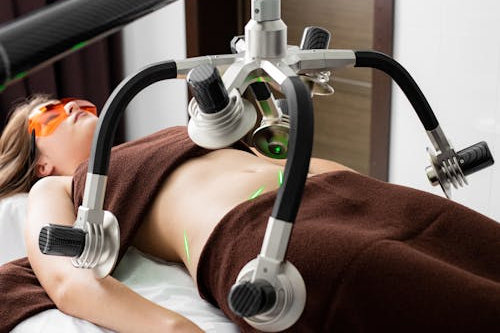
photo credit: Dmitriy Ganin / Pexels
Key Takeaways
- Liposuction is designed for targeted body contouring, not for weight loss.
- The procedure removes localized fat deposits but does not tighten loose skin or treat cellulite.
- Good candidates typically have stable weight, localized fat, and sufficient skin elasticity.
- Results develop gradually, and long-term shape depends on maintaining a stable weight.
- Careful consultation helps match the procedure to realistic goals and anatomy.
Michele Zormeier, MD, is a double-board certified surgeon and the owner of Zormeier Cosmetic Surgery & Longevity Center, where she provides surgical and non-surgical treatments focused on aesthetic refinement and overall wellness. With formal training in pharmacy, medicine, and cosmetic surgery, Michele Zormeier brings a multidisciplinary perspective to procedures that address body shape concerns, including liposuction and body contouring. Her education includes a doctor of medicine degree earned with high distinction, followed by advanced residency and fellowship training in facial plastic and reconstructive surgery. In addition to surgical care, her practice integrates weight management, hormone therapy, and skin care services that support long-term outcomes. This clinical background positions her to clearly explain how liposuction works, who may benefit most, and where its limitations lie, helping patients make informed decisions based on anatomy, health, and realistic expectations.
What Liposuction Can and Cannot Do for Body Shape
Many people consider liposuction when one area of the body does not change despite diet and exercise. Surgeons use the procedure to remove stubborn fat from areas such as the abdomen, thighs, or flanks. Liposuction removes fat cells under the skin, but it is not a weight-loss method. It works best when the goal is to refine shape, not to chase a lower number on the scale.
Liposuction targets pockets of fat beneath the skin. During surgery, a surgeon makes small incisions, inserts a thin tube called a cannula, and uses suction to remove fat from a localized area. By reducing a bulge or thickened area, liposuction can create smoother transitions between body regions and help one area align with the rest.
People often ask about liposuction for the lower abdomen, outer hips, thighs, upper arms, or under the chin. These regions can retain fat even when someone remains active. In many cases, the aim is to soften a bulge or clean up an outline rather than to change overall body size.
However, liposuction cannot tighten loose skin, remove cellulite, or erase stretch marks. If skin elasticity is low, eliminating fat can leave the treated area looking less firm. Surgeons look closely at skin tone during consultation and may recommend a lifting or skin-tightening procedure when sagging is the main concern.
A good candidate typically has a stable weight, localized fat deposits, and skin that can still contract after the procedure. Many surgeons also consider Body Mass Index as part of the assessment of surgical risk. General health and realistic expectations matter as much as the exact area a patient wants to change.
Some people are not good candidates because certain health conditions raise surgical risk or complicate healing. Liposuction is not used to treat obesity or to manage health problems linked to excess weight. When fat is widespread or the concern centers on loose skin rather than fat pockets, a different approach may fit better than liposuction alone.
Recovery usually brings swelling and bruising, and surgeons often recommend compression garments to support healing and limit fluid buildup. Many people return to light activity within a few days, but results develop gradually and may not look final for several months. Follow-up visits give the surgeon a chance to check healing and adjust guidance as activity increases.
Liposuction removes fat cells from the treated area, but weight gain can still change body contours over time. Remaining fat cells can enlarge, and the body can store new fat in untreated areas. Maintaining a stable weight helps preserve the new shape, while major weight changes can alter the result even when the surgery itself went as planned.
During consultation, surgeons review the patient’s medical history, examine fat distribution and skin quality, and discuss realistic results for the patient’s body. They explain when liposuction alone is likely to meet the goal and when another or combined plan may work better. Careful planning reduces the chance that a patient expects a skin change or weight change that the procedure cannot deliver.
Liposuction is most effective when used for a clear, localized contour goal rather than as a substitute for weight loss. Patients who understand those limits can work with their surgeon to develop a plan that aligns with their anatomy and expectations. Used for the right problem and supported by healthy habits, it can be a practical option for targeted reshaping.
FAQs
What is liposuction designed to do?
Liposuction removes stubborn pockets of fat from specific areas to improve body contours. It is intended to refine shape rather than produce overall weight loss.
What can’t liposuction fix?
Liposuction does not tighten loose skin, remove cellulite, or eliminate stretch marks. When skin laxity is the main concern, other procedures may be more appropriate.
Who is a good candidate for liposuction?
Ideal candidates usually have a stable weight, localized fat deposits, and skin that can still contract after fat removal. Overall health and realistic expectations are also important factors.
How long does recovery and results take?
Swelling and bruising are common initially, and many people return to light activity within days. Final results often take several months to fully appear as the body heals.
Can fat come back after liposuction?
Fat cells removed by liposuction do not return, but remaining fat cells can enlarge with weight gain. Significant weight changes can alter the results over time.
About Michele Zormeier
Michele Zormeier, MD, is the owner of Zormeier Cosmetic Surgery & Longevity Center and a double-board certified surgeon with advanced training in cosmetic facial plastic surgery and otolaryngology head and neck surgery. She earned her medical degree with high distinction after completing a bachelor of science in pharmacy. Her clinical work includes facial plastic surgery, liposuction, laser procedures, and aesthetic medicine, supported by ongoing education through the American Academy of Anti-Aging Medicine.
Dr. Zormeier maintains practices in multiple states and focuses on evidence-based care that aligns surgical technique with patient health, anatomy, and long-term wellness goals.