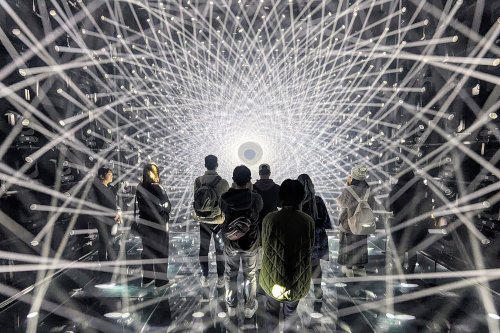
photo credit: DannyWithLove / Wikimedia Commons / CC BY-SA 4.0
Key Takeaways
- teamLab installations use water, light, and sound as active design tools rather than background effects.
- Physical elements like shallow water change how visitors move and experience space.
- Responsive lighting creates environments that shift continuously based on presence.
- Soundscapes help define transitions and emotional tone between installations.
- Sensory feedback replaces signage by teaching visitors how to interact through experience.
Karen D’Attanasio is a marketing communications professional based in Needham, Massachusetts, with more than two decades of experience across finance, media, and global brand strategy. Karen D’Attanasio began her career in Boston with firms such as Brown Brothers Harriman and Northeast Investment Management, where she worked in corporate actions and client relationship management. She later moved into editorial roles, contributing writing to outlets including the Food Network and HNW, Inc., before transitioning fully into marketing communications.
In 2007, Ms. D’Attanasio joined Morgan Stanley as a vice president of marketing communications, where she helped implement global brand strategy across advertising, digital platforms, and client communications, including work related to the integration of Smith Barney. She later served as a senior consultant with Oculus Partners, supporting strategic marketing initiatives at PNC Bank. Her professional background centers on how environments, messaging, and design elements shape audience engagement. These perspectives align with the immersive approach used by teamLab, where water, light, and sound are deliberately orchestrated to guide visitor movement, perception, and interaction within digital art spaces.
How Water, Light, and Sound Shape teamLab Experiences
Visitors enter teamLab rooms – immersive digital art installations created by the Tokyo-based collective teamLab – expecting something different from a traditional museum. These exhibitions combine interactive projections, sound, and environmental design to engage visitors through the body as much as the eyes. At teamLab Planets and teamLab Borderless, water, light, and sound work together to shape how people move through each space.
At teamLab Planets, several installations ask guests to walk barefoot through shallow pools of water. The water alters how people step, because the floor feels different from a dry gallery surface. Each step sends ripples outward, so movement becomes visible in the room. That physical feedback starts at the feet and affects how visitors approach what comes next.
Water also alters how people see the space. Reflections bend and scatter projected light, making edges and distances harder to judge. In low light, reflective surfaces blur boundaries and reduce visual reference points. As a result, the room can feel larger or less defined than a standard gallery space.
Lighting shifts as visitors move through the work. Projections change in response to presence, so the room never looks the same from moment to moment. Motion and proximity trigger visible changes across walls, floors, and surrounding surfaces. That responsiveness gives each space a sense of movement even when visitors stand still.
Other installations use light to pull attention from one area to another. Bright openings, illuminated passages, or shifting projection intensity can make one direction feel more active than another. At Borderless, the “museum without a map” concept supports wandering rather than a single fixed route. Visitors often choose where to go next by watching what draws the eye.
Sound reinforces the tone of each space. Designers pair ambient music and environmental tones with the visuals, so the room feels cohesive rather than silent and detached. These soundscapes vary between rooms and shift during transitions. The change in sound signals that one environment is ending and another is beginning.
In certain rooms, sound and light operate as a combined layer rather than separate effects. In the Floating Flower Garden at teamLab Planets, real orchids rise and spread in response to nearby movement. That physical reaction changes the visitor’s immediate surroundings. The surrounding sensory design intensifies the impression of standing inside a living environment.
Some installations combine water and projected light at the same time. Visitors walk through shallow water as projected koi swim across the floor. The fish imagery changes when it collides with people, turning footsteps into a direct trigger for what appears. The result merges walking and visual change into one continuous loop.
These sensory tools influence how people behave inside the exhibits. Visitors often slow down because surfaces, lighting, and movement-responsive visuals reward careful stepping and watching. Instead of relying on long written explanations, people learn the space by observing what changes as they move. The room communicates its own rules through immediate feedback.
To support pacing, the designers include dark passages and transition corridors between rooms. These spaces create a clear break between one installation and the next. The pause makes each new room feel distinct at entry. The overall layout establishes a pattern of immersion, exit, and re-entry.
Together, these installations show how environmental design guides visitor behavior without signage or verbal instruction. At teamLab Planets and Borderless, water, light, and sound operate as functional tools that set the pace, direction, and focus. The exhibits rely on immediate physical and sensory response, using interaction and feedback to communicate structure and expectations.
FAQs
What makes teamLab exhibitions different from traditional museums?
teamLab exhibitions emphasize immersion and interaction rather than static observation. Visitors influence the environment through movement, creating a constantly changing experience.
Why does teamLab use water in its installations?
Water changes how people walk and perceive space. It provides physical feedback, alters reflections, and makes movement visible within the artwork.
How does lighting affect visitor behavior?
Lighting responds to motion and proximity, guiding attention and encouraging exploration. Shifts in brightness and projection subtly suggest where to move next.
What role does sound play in teamLab spaces?
Sound reinforces the atmosphere of each room and signals transitions between environments. Changes in audio help visitors sense when one experience ends and another begins.
How do visitors learn how to interact with the installations?
Rather than written instructions, teamLab relies on immediate sensory feedback. Visitors observe how the environment reacts to their actions and adjust their behavior naturally.
About Karen D’Attanasio
Karen D’Attanasio is a marketing communications professional with extensive experience in brand strategy, advertising, and digital engagement. She has held senior roles at Morgan Stanley and served as a consultant supporting marketing initiatives at PNC Bank. Her background spans finance, media, and global brand integration. A graduate of Lafayette College, she holds a BA in international affairs and Spanish and has studied abroad in Europe.