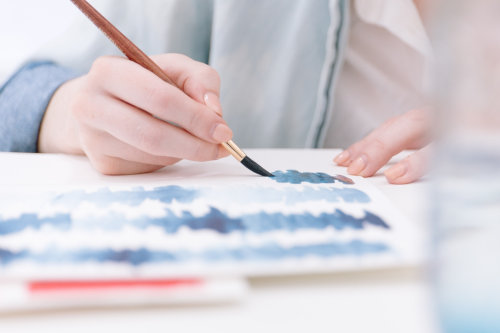
Key Takeaways
- Watercolor is translucent and fast-drying, making mistakes harder to correct than with opaque mediums like oil paint.
- Overworking a painting can damage the paper and reduce vibrancy, so planning layers in advance is essential.
- Using a larger brush can minimize excessive strokes and help prevent overworking detailed areas.
- Proper paint-to-water balance is critical, as over-dilution reduces control and affects color intensity.
- Patience during drying and thoughtful correction techniques, such as lifting or light sanding, can help manage unavoidable errors.
Bryan Hackleman is a mechanical engineer based in Fort Collins, Colorado, with a professional background rooted in analytical problem solving, design precision, and iterative improvement. He earned both his bachelor’s and master’s degrees in mechanical engineering from Colorado State University, where he also worked in undergraduate and graduate research roles. Over the course of his career, Bryan Hackleman has applied his technical expertise across manufacturing, semiconductor equipment design, and control panel development for energy and industrial applications.
Outside of his engineering work, Bryan Hackleman maintains a long-standing interest in creative pursuits, including drawing and painting. His experience balancing technical rigor with artistic exploration informs an appreciation for process, planning, and patience. These same principles are especially relevant to watercolor painting, a medium that rewards foresight and restraint. Understanding common watercolor mistakes and how to avoid them can help artists approach the medium with confidence, structure, and adaptability.
Tips for Avoiding Watercolor Mistakes
“Painting is just another way of keeping a diary,” said Picasso. But unlike writing, where you can always cross out words or ideas you don’t like or rewrite on a fresh page, you can’t always paint afresh every time you drop a brush in your painting. Below are some common watercolor (uses water as the main solvent) mistakes and tips for correcting them.
Watercolor mistakes are harder to fix than oil painting errors. With oil paint, you can wipe or scrape paint off or simply cover it, as oil paint is opaque. Watercolor, being translucent, makes covering errors difficult and risks damaging the painting. Watercolors also dry faster than oil paints.
Because watercolors aren’t as glossy as oil paint, knowing when to stop is one of the biggest challenges. The temptation to keep adding depth, to work areas that aren’t quite “rich,” can lead to overworking a painting. Overworking the same area can damage the paper or rob your piece of the surprise that makes watercolor pop.
More isn’t necessarily better. To avoid the temptation to add details, have a plan and follow it. Visualize your layers and how you want the finished piece to look. This way, you know just what you need to pass the point across.
Another way to avoid overworking your paint is to use a bigger brush. It covers a bigger area and helps reduce the number of strokes. A smaller brush may help you feel more in control, but it may force you to use more strokes than are necessary.
Then there’s over-dilution. Watercolors allow you to experiment with a wide range of intensity. But you don’t want to use too much water, or you’ll lose control of the paint. The right mix is sticky enough to hold and easy to work with.
Getting the right mix can be challenging, but it’s doable. That starts with an understanding of the various watercolor techniques. Dry brushing, for example, requires a relatively dry brush.
Color type also dictates the paint-to-water ratio. Lighter colors may require more water, unlike darker ones. Your subject may also determine how saturated your solution can be. A highly diluted mix is ideal for lighter washes, such as skies and water bodies.
Then there’s impatience. Watercolors may dry faster than oil painting, but that’s no license to be impatient. You need to allow paint to dry fully before layering to avoid disturbing the colors and causing them to mix, which can lead to the loss of vibrancy. If you must use a hair dryer, set it to a low, cool mode.
Watercolor dries faster than oil paint, which means you can finish the former faster. But that also means you have a relatively small window of opportunity to fix watercolor mistakes. Lifting the paint with a dry or damp brush or towel may be all you need to do to remove an unintended paint splash on a dry area. Splashes on a wet area are harder to correct. Lifting may also remove excess water from your paper. If you notice a mistake only after your painting has dried, use fine sandpaper to buff it off.
Painting mistakes happen despite all the planning and carefulness. While it’s recommended to deal with watercolor mistakes immediately, it helps to first step away from your painting. You may find that the unintended splash or your dropping on your piece is nothing, a typo in your diary. Plan your projects, but be prepared to embrace the unexpected.
FAQs
Why are watercolor mistakes difficult to fix?
Because watercolor is translucent and absorbs into paper quickly, covering or removing errors without damaging the surface can be challenging.
What does it mean to overwork a watercolor painting?
Overworking occurs when an artist repeatedly brushes the same area, potentially damaging the paper and dulling the painting’s natural vibrancy.
How can artists prevent overworking?
Planning the composition in advance and using larger brushes to reduce unnecessary strokes can help preserve freshness.
How do you achieve the right paint-to-water ratio?
The mixture should be fluid yet controlled, with lighter washes requiring more water and darker tones needing more pigment.
How can small watercolor mistakes be corrected?
Minor errors may be lifted with a dry or damp brush or towel, and once fully dry, lightly buffed with fine sandpaper if necessary.
About Bryan Hackleman
Bryan Hackleman is a mechanical engineer based in Fort Collins, Colorado, with professional experience in semiconductor equipment design, industrial enclosures, and manufacturing systems. He holds bachelor’s and master’s degrees in mechanical engineering from Colorado State University and has contributed to published research in energy and engine systems. Alongside his technical career, Bryan Hackleman pursues creative interests including drawing and painting, applying the same discipline and attention to process that define his engineering work.