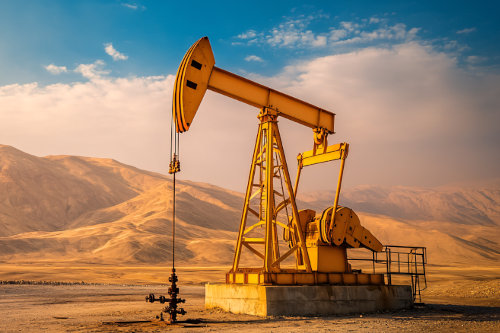
photo credit: Tylijura / Pixabay
Key Takeaways
- Martin J. Milita brings decades of regulatory and government affairs experience to discussions about hydraulic fracturing oversight in the United States.
- Hydraulic fracturing plays a major economic role but raises environmental concerns related to water contamination, air pollution, and chemical disclosure.
- Federal oversight has been limited due to statutory exemptions such as the “Halliburton Loophole” under the Safe Drinking Water Act.
- Regulatory responsibility largely falls to state governments, resulting in fragmented enforcement and inconsistent inspection practices.
- Proposed reforms, including the FRAC Act and Fracking Ban Act, seek to restore federal authority and strengthen environmental protections.
Attorney Martin J. Milita is a government affairs strategist and business executive with decades of experience in regulatory advocacy, corporate governance, and public policy. Based in Trenton, New Jersey, Martin J. Milita has advised public and private sector clients since 1996, serving in leadership roles that include CEO of Fiore Group Companies, Inc., managing partner of Holman Public Affairs LLC, and senior director of Duane Morris Government Strategies LLC. His work has involved legislative and regulatory lobbying, environmental permitting, crisis management, and public procurement strategy. With experience spanning environmental compliance, infrastructure development, and executive branch advocacy, he brings a practical understanding of how federal and state regulatory systems operate. That background provides relevant context for examining the evolving oversight of hydraulic fracturing in the United States.
Examining the Regulation of Fracking in the United States
Hydraulic fracturing, or fracking, uses pressurized water, sand, and other chemicals to extract oil and natural gas. This procedure provides most of the US natural gas and a large portion of crude oil.
Despite its economic role, fracking raises major environmental and health concerns. Each well uses millions of gallons of chemically treated water, increasing risks of water contamination, air pollution, and toxic waste exposure. The process also releases toxic gases such as methane.
Since the onset of the natural gas boom around the year 2000, regulatory oversight in the country has largely been delegated to state governments. This is a consequence of industry opposition to federal supervision and lax enforcement practices.
Notably, federal environmental regulations include major exemptions that benefit the oil and gas industry, particularly hydraulic fracturing. The most common is the “Halliburton Loophole,” which removed most fracking activities from the Safe Drinking Water Act’s (SDWA) oversight. This exemption weakened federal protections for groundwater and allows companies to withhold information about the chemicals they inject into the underground.
While fracking operations using diesel fuel are technically still regulated, enforcement is limited. An investigation by Congress found that between 2005 and 2009, some energy companies injected diesel-based fluids in some states without the required permits. The industry admitted to the practice but blamed the Environmental Protection Agency for failing to issue clear enforcement rules.
Additionally, some federal laws exempt oil and gas operations. The Resource Conservation and Recovery Act excludes oil and gas waste, despite the industry producing massive toxic wastewater daily. By 2012, fracking was also exempt from the National Environmental Policy Act, the Clean Water Act, and the Comprehensive Environmental Response, Compensation, and Liability Act. Additionally, many new air-quality rules do not apply to existing wells.
Further, without strong federal oversight, only state and local governments can protect communities and the environment. This results in a fragmented regulatory system that is often weak and inconsistently enforced. Many states lack sufficient staff and funding, leaving thousands of oil and gas wells uninspected each year. Even when there are violations, there are minimal penalties, rarely large enough to change some energy companies’ behavior.
Moreover, chemical disclosure rules limit accountability. State laws commonly allow companies to withhold information by claiming trade secret protections, a policy that the American Legislative Exchange Council (ALEC) supports. Instead of mandatory disclosure, regulators frequently rely on “FracFocus,” a voluntary industry database with documented gaps and delays. Oversight further weakens due to the absence of federal regulation for about 240,000 miles of oil and gas pipelines nationwide.
There are several solutions to the weakened regulatory environment. To begin, Congress has proposed legislation to restore hydraulic fracturing federal oversight. The Fracturing Responsibility and Awareness of Chemicals Act (FRAC Act) was introduced to eliminate the “Halliburton Loophole” and place fracking back under the SDWA. Congress also introduced the Fracking Ban Act (H.R. 5857) in 2020. This bill aims to phase out hydraulic fracturing by 2025 and support workers and communities during the transition.
Additional proposals, including the Focused Reduction of Effluence and Stormwater runoff through Hydrofracking Environmental Regulation (FRESHER) Act, aim to close exemptions in the Clean Air Act and Clean Water Act by strengthening controls on air emissions and industrial stormwater runoff from fracking operations.
Beyond legislative efforts, federal agencies have proposed rules for drilling on public lands, emphasizing issues such as managing flowback water more safely. Other entities have recommended rapid reforms, such as requiring full chemical disclosure, tracking air emissions, and creating a waste manifest system for materials transported off-site.
FAQs
What is hydraulic fracturing?
Hydraulic fracturing, or fracking, is a method of extracting oil and natural gas by injecting pressurized water, sand, and chemicals into underground rock formations. The process has significantly expanded domestic energy production over the past two decades.
What is the “Halliburton Loophole”?
The “Halliburton Loophole” refers to an exemption that removed most fracking activities from regulation under the Safe Drinking Water Act. This exemption limits federal oversight of groundwater protections and chemical disclosure requirements.
Why is fracking regulation largely handled by states?
Regulatory authority has largely been delegated to state governments due to federal exemptions and industry opposition to centralized oversight. As a result, enforcement practices and inspection resources vary widely from state to state.
What are the main environmental concerns associated with fracking?
Fracking operations involve large volumes of chemically treated water and can produce air emissions such as methane. Concerns include groundwater contamination, wastewater disposal, pipeline oversight gaps, and incomplete chemical disclosure.
What legislative reforms have been proposed?
Congress has introduced measures such as the Fracturing Responsibility and Awareness of Chemicals (FRAC) Act and the Fracking Ban Act (H.R. 5857). Additional proposals like the FRESHER Act aim to strengthen air and water protections and close regulatory exemptions.
About Martin J. Milita
Martin J. Milita is an attorney and senior director of Duane Morris Government Strategies LLC, where he advises Fortune 500 companies, public agencies, and private enterprises on legislative and regulatory matters. He previously co-founded Holman Public Affairs LLC and served as CEO of Fiore Group Companies, Inc., overseeing operations across multiple New Jersey counties. Earlier in his career, he practiced law with Sills Cummis and Riker Danzig and served as New Jersey State Deputy Attorney General, Chief of Tax Fraud.