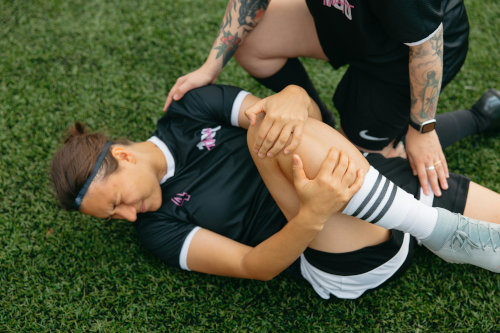
photo credit: Anastasia Shuraeva / Pexels
Key Takeaways
- The legal doctrine of “assumption of risk” generally protects leagues and participants from liability for injuries inherent to sports.
- Injuries caused by normal gameplay, such as collisions or accidental contact, are typically not grounds for legal action.
- Liability may arise when injuries result from reckless behavior or actions that go beyond the rules of the sport.
- Facility owners and organizers have a duty to maintain safe conditions and can be held responsible for negligence.
- Understanding the difference between inherent risk and negligence is key to determining if legal action is justified.
Adult recreational sports leagues are a booming business. From competitive indoor soccer matches to weekend grass and beach 2-on-2 tournaments, these leagues offer a vital outlet for physical activity and community. However, sports are inherently physical, and injuries are a statistical certainty.
When a participant tears an ACL or suffers a concussion during a game, who pays the medical bills? In most cases, the injured party’s health insurance bears the brunt. But when an injury is the result of egregious behavior or unsafe conditions, the legal doctrine of “Assumption of Risk” is put to the test.
The “Inherent Risk” Standard
When you step onto a court or a field, the law assumes you are implicitly agreeing to the normal hazards associated with that specific game. If you are playing in a volleyball tournament and you collide with a teammate while diving for a ball, resulting in a broken wrist, you generally cannot sue your teammate or the league. Collisions are an inherent part of the sport.
This legal doctrine is designed to prevent the court system from being flooded with lawsuits over standard athletic mishaps. Without it, organized sports could not exist.
When the Risk Becomes Unreasonable
The protection of “assumed risk” evaporates when an injury is caused by something outside the normal scope of the game. This typically falls into two categories: reckless participant behavior and facility negligence.
First, if an opposing player acts with reckless disregard for safety – such as intentionally undercutting a player who is mid-air or initiating a physical fight after a whistle – their behavior transcends the rules of the game. In these instances, the injured party may have a valid civil claim for battery or gross negligence against the individual player.
Second, the league organizers and facility owners have a duty of care. If a tournament organizer fails to clear dangerous debris from a beach court, or if an indoor facility ignores a leaking roof that creates a massive slipping hazard on a hardwood floor, they are liable. You assume the risk of the sport, but you do not assume the risk of a poorly maintained venue.
Taking Legal Action
Distinguishing between a “bad break” during a game and actionable legal negligence requires a nuanced understanding of civil torts. Injured athletes often face resistance from league insurance policies designed to deny all claims outright. Legal professionals, including the team at Shindler & Shindler, can help cut through the red tape, evaluating the specific circumstances of the injury to determine if a third party is legally financially responsible for the damages.
FAQs
What does “assumption of risk” mean in recreational sports?
It means that participants accept the normal dangers associated with a sport when they choose to play. This includes common risks like collisions or falls. Because of this, most standard injuries do not result in legal liability.
Can I sue if I get injured during a game?
In most cases, you cannot sue for injuries that occur as part of normal gameplay. However, if the injury was caused by reckless or intentional actions, legal options may be available. Each situation depends on the specific facts surrounding the incident.
What counts as reckless behavior in sports?
Reckless behavior goes beyond normal play and includes actions that show disregard for others’ safety. Examples include intentional fouls, fights, or dangerous moves outside the rules. These actions may create grounds for a legal claim.
Are league organizers responsible for injuries?
Organizers can be held responsible if injuries result from unsafe conditions or poor facility maintenance. They have a duty to provide a reasonably safe environment for participants. Failing to address known hazards can lead to liability.
When should I consult a lawyer after a sports injury?
You should consult a lawyer if your injury was severe or caused by negligence or intentional harm. Legal professionals can help determine whether you have a valid claim. They can also guide you through dealing with insurance and potential compensation.
Conclusion
Staying active in recreational leagues shouldn’t mean sacrificing your financial stability if the worst happens. While bumps and bruises are part of the game, severe injuries caused by malicious actions or negligent organizers warrant legal scrutiny and fair compensation.