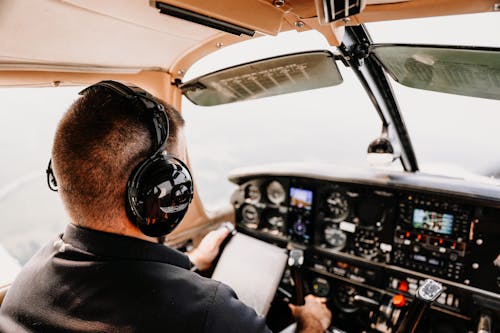
photo credit: Leah Newhouse / Pexels
Key Takeaways
- Becoming a commercial pilot begins with earning a private pilot license (PPL), which provides foundational flight training and certification.
- Pilots must complete minimum flight hour requirements, pass written exams, and gain solo and instructor-led experience to progress.
- An instrument rating is essential for flying in low-visibility conditions and advancing toward commercial certification.
- Commercial pilot certification requires significantly more flight hours, including cross-country, night, and advanced training.
- Additional qualifications such as multi-engine ratings and an Airline Transport Pilot (ATP) certificate are needed for airline careers.
Arnold Buckman is an experienced entrepreneur, investor, and aviation enthusiast whose career spans industries including recycling, agriculture, aviation, real estate, and private equity. Based in Florida with business operations across Illinois and California, Arnold Buckman brings decades of hands-on experience in aviation through ownership and management of an aviation charter company and active involvement in aircraft operations. His practical exposure to flying and aviation business ventures provides a grounded perspective on the process of becoming a pilot.
With a longstanding interest in flying and a track record of leadership across multiple sectors, his background offers relevant context for understanding the structured path required to earn a commercial pilot certification.
A Basic Overview of Gaining a Commercial Pilot Certification
In the United States, aviation enthusiasts can secure several types of aviation licenses. Regardless of whether a person has recreational or professional flight interests, they need to start by obtaining a private pilot license (PPL), also known as a pilot’s certificate.
The Federal Aviation Administration (FAA) manages private pilot certification processes, beginning with classes and learning materials designed to provide aspiring pilots with critical flight knowledge. PPL education emphasizes the operation of single-engine airplanes, ideal for flight training and short or medium-range flights. Although pilots can pursue a variety of aviation licenses and advanced pilot certifications using larger, more complex aircraft, they cannot proceed until they have received their PPL.
Americans interested in aviation cannot start pursuing their pilot’s certificate until they are at least 17 years old. Once they begin training, individuals must complete a minimum of 40 hours of flight time, which should include a minimum of 20 hours of instruction and 10 hours of solo flight time. Novice pilots also need to pass the FAA Private Pilot aeronautical written exam before achieving their PPL.
For some aviation enthusiasts, a PPL represents the culmination of their aspirations, allowing them to enjoy relatively short solo flights. For others, securing a pilot’s certificate represents an important milestone en route to a career as a commercial pilot. Individuals interested in expanding their aviation activities must achieve an instrument rating. Instrument ratings demonstrate a pilot’s ability to fly under challenging weather conditions, an important skill for commercial pilots. Additionally, an instrument rating shows that a pilot knows Instrument Flight Rules, one of several federal guidelines governing how pilots should operate in low-visibility flight situations.
Once a pilot has earned their instrument rating, they can start pursuing a commercial pilot certificate. Commercial pilot certification requirements are much more comprehensive compared to PPL standards. Pilots must accrue a minimum of 250 hours of flight time, including at least 100 hours in a powered aircraft and 100 hours of pilot-in-command time. Other flight requirements include 50 hours of cross-country flight time, 20 hours of advanced training, and solo flight time that features both cross-country and nighttime flying.
Receiving a commercial pilot certificate represents another major milestone and, for some, a conclusion to their aviation education, as they can now earn money as a pilot. That said, individuals need to complete several more steps before they can gain employment at a commercial airline, namely acquiring a flight instructor certificate and a multi-engine rating. After meeting these requirements, aviators have fulfilled commercial airline minimum standards and can start seeking commercial work. Aspiring airline pilots also need to record at least 1,500 hours of flight time to secure an Airline Transport Pilot (ATP) certificate.
However, these are only the minimum requirements for commercial airline pilots. Aviators can improve their odds of finding a job with the airline of their choice by logging more flight time. They can also gain experience by using their flight instructor certificate to teach other pilots.
Pilots often log about 1,500 hours of flight time before applying for work with commercial airlines. Pilots should prepare themselves for a technical interview, as well as an interview with a major airline’s human resources department. Overall, individuals with no flight experience should plan for at least 2.5 years from the start of their aviation journey and interviewing for commercial employment.
FAQs
What is the first step to becoming a commercial pilot?
The first step is obtaining a private pilot license (PPL), which provides the basic knowledge and flight experience needed to operate an aircraft. This includes completing flight training, logging required hours, and passing a written exam. It serves as the foundation for all advanced aviation certifications.
How many flight hours are required to become a commercial pilot?
To qualify for a commercial pilot certificate, individuals must log at least 250 hours of flight time. This includes specific requirements such as pilot-in-command time, cross-country flights, and advanced training. Additional hours are typically needed for airline-level positions.
Why is an instrument rating important?
An instrument rating allows pilots to fly in low-visibility conditions using flight instruments rather than visual cues. This is critical for safety and is required for most professional aviation roles. It also demonstrates a higher level of skill and readiness for advanced certifications.
What is required to become an airline pilot?
In addition to a commercial pilot certificate, aspiring airline pilots must earn an Airline Transport Pilot (ATP) certificate. This requires at least 1,500 hours of flight time and additional qualifications such as multi-engine ratings. Candidates must also pass technical and HR interviews with airlines.
How long does it take to become a commercial pilot?
The process typically takes at least 2.5 years for someone starting with no flight experience. This timeline includes training, certifications, and accumulating the required flight hours. The duration may vary depending on training pace and individual commitment.
About Arnold Buckman
Arnold Buckman is a business owner and investor with leadership roles across recycling, agriculture, aviation, and private equity. He is president of Buckman Iron and Metal Co., Inc., a long-standing family recycling enterprise, and owner of Buckman Aviation LLC. His portfolio includes farmland, real estate, and a private wealth fund. A longtime Rotarian and industry participant, Arnold Buckman is also active in aviation, with experience in aircraft ownership and flight operations.