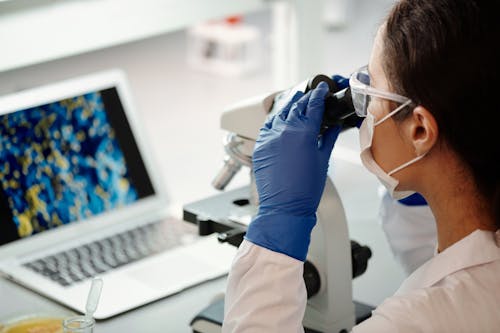
photo credit: Edward Jenner / Pexels
Key Takeaways
- Regenerative medicine focuses on repairing or replacing damaged tissues by activating the body’s natural healing processes or introducing new cells.
- Stem cell therapy plays a central role by using undifferentiated cells to regenerate tissues and reduce inflammation.
- Gene therapy and CRISPR technology target diseases at the genetic level, offering more precise and personalized treatment options.
- Tissue engineering combines biology and engineering to create functional tissue replacements using scaffolds and viable cells.
- These innovations are increasingly applied in clinical settings to treat chronic conditions, injuries, and previously untreatable diseases.4
Haroon Hameed, M.D. is an interventional pain physician and technology entrepreneur based in the Washington, DC area, with extensive experience in regenerative medicine and medical software development. After completing his residency in 2011 and fellowships in pain medicine at Johns Hopkins University School of Medicine and in spine interventions, Haroon Hameed, M.D. has held leadership roles including Medical Director positions in pain management. He currently serves as Director of Regenerative Medicine at Clearway Pain Solutions, where he delivers advanced therapies such as stem cell treatments, PRP injections, and infusion-based care. In parallel, he founded The Duality Companies, Inc., developing a cloud-based platform that integrates with electronic medical records to enhance clinical documentation.
His combined expertise in clinical care and technology aligns with the growing role of advanced innovations in regenerative medicine.
Advancing Innovation in Regenerative Medicine
Regenerative medicine supports healing by activating the body’s natural repair processes or introducing new cells or tissues to replace damaged ones. This process can happen in two primary ways. Endogenous repair stimulation uses targeted signals or treatments to prompt the body to generate healthy cells. On the other hand, exogenous tissue replacement introduces lab-created cells or tissues into the body to repair or replace damaged areas. These therapies may use tissue fragments, living cells, or genetic material that supports healing. In some cases, combining multiple treatments enhances and accelerates recovery.
Regenerative medicine technologies focus on advanced methods for repairing or replacing damaged tissues and organs to improve the overall quality of life. Progress in this field is also creating new possibilities for conditions once considered untreatable, signaling a new chapter in medical treatment.
One of the most promising areas within regenerative medicine is the development of cutting-edge therapies that directly harness the body’s healing potential. Stem cell therapy is a leading example of this advancement, using specialized cells to treat and manage a variety of medical conditions. Stem cells are unique because they are undifferentiated, meaning they can develop into different types of cells, such as bone, muscle, or nerve cells. This therapy focuses on using their natural regenerative abilities to repair damaged tissues and support healing, especially in conditions with limited treatment options. Stem cells can also influence the immune system and help reduce inflammation. As a result, stem cell therapy aims to promote tissue regeneration and, ultimately, improve patients’ overall quality of life by addressing the underlying causes of disease and injury.
Gene therapy has emerged as another key approach within regenerative medicine for organ disease, focusing on addressing diseases at their genetic root. Gene therapy involves altering the genetic material inside a patient’s cells to treat or prevent illness, mainly through the use of viral vectors and CRISPR technology.
Viral vectors are commonly used in this process, relying on modified viruses to deliver therapeutic genes directly into cells. Their effectiveness comes from their natural ability to enter host cells, making them a widely used option for introducing new genetic material or correcting faulty genes. Viral vectors target many different cell types, enabling their use across various tissues. However, this approach also has challenges, including the risk of immune system reactions and potential complications when the new genetic material integrates with the patient’s genome.
CRISPR technology adds a more precise and flexible approach to gene therapy. It allows scientists to directly edit specific parts of a gene, enabling them to target and modify genetic sequences linked to diseases. Its simplicity and efficiency have made it a widely preferred tool in both research and clinical settings. CRISPR is also highly adaptable, enabling researchers to customize it for particular genetic targets. Despite these advantages, there is the risk of unintended edits and the ethical questions surrounding genetic modification, which require careful oversight as the technology continues to develop.
Alongside gene-based approaches, tissue engineering plays a central role in regenerative medicine. It combines biological science with engineering techniques to create substitutes that restore, maintain, or enhance tissue function. This field relies on scaffold design and cell sourcing. Scaffold design provides a structural framework that supports cell growth and organizes cells into functional tissues. Cell sourcing focuses on selecting suitable cells that are functional, viable, and capable of integrating with the body. A wide range of cell types can be used, including stem cells and specialized cells from different sources, offering flexibility in developing engineered tissues.
As these technologies continue to evolve, their real value lies in their application in everyday clinical care. Regenerative medicine is used in hospitals and clinics to treat injuries, manage chronic conditions, and repair damaged tissues or organs. It has shown a strong impact in areas such as orthopedics, neurology, endocrinology, cardiology, and age-related conditions.
In orthopedic care, regenerative treatments are especially useful for tissues like cartilage, tendons, and ligaments, which heal slowly and often incompletely. Therapies such as mesenchymal stem cells help repair damaged cartilage, while platelet-rich plasma, derived from a patient’s own blood, promotes faster healing. These approaches can also be combined with supportive structures to enhance tissue growth. Such treatments are commonly used for joint conditions, sports injuries, and chronic inflammation, often helping patients avoid or delay surgery. In neurology, regenerative medicine targets conditions where nerve damage is difficult to repair, including stroke, spinal cord injuries, and Parkinson’s disease.
FAQs
What is regenerative medicine?
Regenerative medicine is a field of healthcare focused on repairing, replacing, or regenerating damaged tissues and organs. It works by stimulating the body’s natural healing processes or introducing new cells, tissues, or genetic material to restore function.
How does stem cell therapy work?
Stem cell therapy uses undifferentiated cells that can develop into specialized cell types such as bone, muscle, or nerve cells. These cells help repair damaged tissues, reduce inflammation, and support the body’s natural recovery processes.
What role does gene therapy play in regenerative medicine?
Gene therapy targets diseases at their genetic source by modifying or replacing faulty genes. Techniques such as viral vectors and CRISPR allow scientists to deliver or edit genetic material within cells to treat or prevent illness.
What is tissue engineering?
Tissue engineering combines biological science with engineering methods to create functional tissue substitutes. It uses scaffolds and living cells to develop structures that can restore or enhance tissue function in the body.
What conditions can regenerative medicine treat?
Regenerative medicine is used to treat a range of conditions, including orthopedic injuries, neurological disorders, cardiovascular diseases, and chronic inflammation. It is especially valuable for conditions where traditional treatments have limited effectiveness.
About Haroon Hameed, M.D.
Haroon Hameed, M.D. is an interventional pain physician and Director of Regenerative Medicine at Clearway Pain Solutions. He specializes in treatments such as stem cell therapy, PRP injections, and infusion-based care. He is also the founder and CEO of The Duality Companies, Inc., where he developed a cloud-based medical software platform. Dr. Hameed has completed fellowships in pain medicine and spine interventions and has contributed to research publications and professional medical societies.