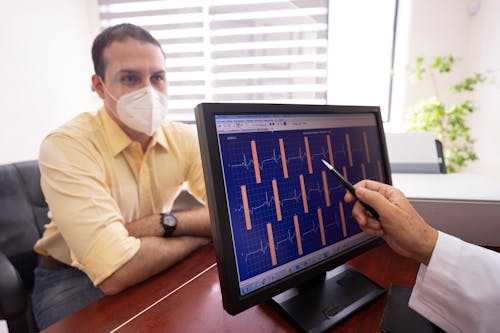
photo credit: Los Muertos Crew / Pexels
Key Takeaways
- Predictive cardiology uses AI, machine learning, and big data to identify cardiovascular risks before symptoms appear.
- It integrates diverse data sources such as EHRs, ECGs, imaging, biomarkers, and lifestyle factors for more accurate risk assessment.
- Machine learning models can detect patterns and early warning signs that are not visible through traditional methods.
- Personalized risk profiles allow clinicians to tailor prevention strategies and treatment plans for individual patients.
- Atrial fibrillation is a key focus area due to its strong link to stroke and heart failure.
- Challenges include model interpretability, data quality, and integration into clinical workflows, but future potential remains strong.
Dr. Sanjiv Narayan is a Stanford University professor of medicine with more than two decades of experience in cardiovascular research and clinical practice. A native of Buckinghamshire, England, Sanjiv Narayan earned his MB,ChB and doctorate in neuroscience from the University of Birmingham before holding positions at institutions including UCLA, Harvard Medical School, and MIT. He directs the atrial fibrillation program and electrophysiology research at Stanford and has contributed to innovations such as focal impulse and rotor modulation therapy.
His extensive involvement with leading organizations like the American Heart Association and the Heart Rhythm Society reflects a sustained commitment to advancing cardiovascular care, including emerging areas such as predictive cardiology.
An Overview of Predictive Cardiology
Predictive cardiology represents a significant improvement to cardiovascular medicine. This aspect of cardiovascular medicine uses artificial intelligence (AI), machine learning (ML), and big data to anticipate cardiovascular events before they occur. Unlike traditional cardiology, which primarily responds to symptoms or clinical findings, predictive cardiology identifies individuals who are at risk much earlier. It also suggests personalized care and prevents or reduces disease progression and complications. Predictive cardiology is laying down a new framework for how clinicians respond to conditions like heart failure, stroke, atrial fibrillation (AF), and other acute cardiovascular conditions (1).
Predictive cardiology uses computational methods like AI-driven models to analyze large volumes of imaging, physiological, and lifestyle data to estimate a person’s risk of cardiovascular disease. These models integrate electronic health records (EHRs), electrocardiograms (ECGs), genetic and demographic variables, biomarkers, laboratory data, and imaging data. Predictive models identify patterns that are invisible to the human eye and provide earlier and more accurate risk stratification, particularly for conditions like AF and its associated risk and heart failure. It also reduces the progression to heart failure in patients with existing cardiac arrest.
Machine learning is one of the key technologies behind predictive cardiology (2). ML algorithms learn the relationships that exist between variables and outcomes from data. It makes use of supervised learning like random forests, neural networks, and aggregation models to predict risk based on labeled patient data. Deep learning models can analyze complex ECG time-series data to identify signatures that are indicative of future arrhythmias.
Instead of relying on a single type of input, predictive cardiology combines clinical history, ECG features, imaging phenotypes, and biochemical markers into a unified model. For instance, a random survival forest model that incorporates cardiac MRI-derived phenotypes and clinical data achieved better prediction of new-onset AF compared to traditional statistical models.
Predictive cardiology can also create personalized risk profiles (2). By combining data from clinical history, imaging, biomarkers, and lifestyle factors, these systems generate tailored insights that go far beyond traditional scoring methods. Physicians can use these insights to decide on initiating anticoagulation therapy, recommending targeted lifestyle changes, or increasing monitoring for high-risk patients. At the same time, healthcare systems benefit from better resource allocation by focusing attention on those who need it most while avoiding unnecessary interventions for low-risk individuals.
Atrial fibrillation remains a central focus of predictive cardiology due to its widespread impact and strong link to stroke and heart failure (3). Machine learning models have significantly improved the ability to predict this condition by integrating data from ECGs, imaging, and clinical records. In some cases, advanced neural networks trained on large datasets can identify patients at risk even before any clinical signs appear. Beyond atrial fibrillation, predictive cardiology also supports the management of heart failure, stroke risk, and other cardiovascular conditions. These models help estimate hospitalization risk, refine treatment strategies, and improve overall disease management across a wide range of patient populations.
Despite its promise, predictive cardiology still faces important challenges. Many advanced models operate as complex systems that clinicians may find difficult to interpret, which can limit trust and adoption. The quality and diversity of data also play a critical role, as biased or incomplete datasets can affect accuracy across different patient groups. In addition, integrating these tools into everyday clinical practice requires reliable systems and strong validation. Even with these challenges, the future of predictive cardiology remains promising. As technology continues to advance, it will support a more proactive and precise approach to cardiovascular care, helping clinicians intervene earlier and improve long-term patient outcomes.
FAQs
What is predictive cardiology?
Predictive cardiology is a field that uses advanced technologies like AI and machine learning to forecast cardiovascular risks before symptoms develop. It enables earlier intervention and more personalized patient care.
How does AI improve cardiovascular risk prediction?
AI analyzes large and complex datasets to identify patterns and correlations that traditional methods may miss. This leads to more accurate and earlier detection of potential heart conditions.
What types of data are used in predictive cardiology?
Predictive cardiology combines clinical history, ECG data, imaging results, biomarkers, genetic information, and lifestyle factors. This comprehensive approach improves the accuracy of risk assessments.
Why is atrial fibrillation important in predictive cardiology?
Atrial fibrillation is a common condition linked to serious outcomes like stroke and heart failure. Predictive models help identify at-risk individuals earlier, enabling preventive care and better management.
What are the challenges of predictive cardiology?
Challenges include ensuring data quality, reducing bias, and making complex AI models easier for clinicians to interpret. Integrating these tools into everyday clinical practice also requires validation and reliable systems.
(1) Krittanawong, Narayan et al. “Deep learning for cardiovascular medicine: a practical primer” Eur Heart J 2019 Vol. 40 Issue 25 Pages 2058-2073
(2) Armoundas, Narayan et al. “Use of Artificial Intelligence in Improving Outcomes in Heart Disease: A Scientific Statement From the American Heart Association” Circulation 2024 Vol. 149 Issue 14 Pages e1028-e1050
(3) Goldberger, Narayan et al. “Mechanistic Insights From Trials of Atrial Fibrillation Ablation: Charting a Course for the Future” Circ Arrhythm Electrophysiol 2024 Vol. 17 Issue 8 Pages e012939
About Sanjiv Narayan
Sanjiv Narayan is a professor of medicine at Stanford University and directs its atrial fibrillation program and electrophysiology research. With more than 20 years of experience, he has held roles at UCLA, UC San Diego, Harvard Medical School, MIT, and Washington University School of Medicine. He co-developed focal impulse and rotor modulation therapy and has contributed extensively to cardiovascular research. Narayan is a Fellow of the American College of Cardiology and the Royal College of Physicians of London.