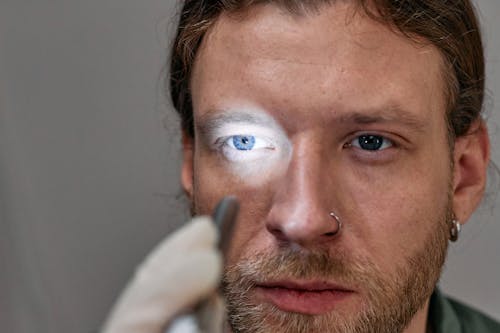
photo credit: Cottonbro Studio / Pexels
Key Takeaways
- Dry age-related macular degeneration (AMD) is no longer managed solely through observation, as new therapies now offer opportunities to slow disease progression.
- Geographic atrophy (GA), an advanced form of dry AMD, causes permanent retinal damage, making early detection and treatment planning increasingly important.
- AREDS nutritional supplements remain a valuable management tool for many patients by helping reduce the risk of progression to advanced AMD.
- Recently approved treatments such as SYFOVRE and IZERVAY target the complement system and can slow the growth of geographic atrophy lesions in some patients.
- Emerging gene therapy research may eventually provide longer-lasting, targeted treatments that reduce the need for repeated interventions and further transform AMD care.
For more than 50 years, Retina Associates has provided specialized retinal care to patients in Tucson, Arizona, while also welcoming individuals from around the world seeking advanced ophthalmic treatment. Led by Cameron Javid, MD, alongside April Harris, MD, Egbert Saavedra, MD, and Mark Walsh, MD, the practice focuses exclusively on diseases affecting the retina, macula, and vitreous. Each physician is board certified by the American Board of Ophthalmology and remains actively involved in professional organizations and clinical research. Retina Associates has also participated in numerous national clinical trials involving macular degeneration, gene therapy, and late-stage dry age-related macular degeneration.
Their ongoing involvement in retinal research and patient care provides important perspective on the future of treatment approaches for dry AMD and geographic atrophy.
The Future of Dry AMD Treatment
Treatment for the eye disease known as dry age-related macular degeneration (AMD) is changing in ways that would have seemed unlikely only a few years ago. For a long time, patients had limited options beyond observation, lifestyle guidance, and nutritional supplementation. That is no longer the full picture. Researchers now have a better understanding of the biological processes involved in retinal degeneration, and that progress has led to new medications, new clinical trials, and growing interest in gene therapy for retinal disease.
For practices such as Retina Associates in Tucson, Arizona, these developments matter, because they change the conversation from disease monitoring alone to active treatment planning and future research opportunities.
Dry AMD affects the macula, the central portion of the retina that is responsible for detailed vision. When the macula becomes damaged, patients may notice blurred central vision, trouble reading, reduced contrast sensitivity, and difficulty recognizing faces. In advanced cases, dry AMD can progress to geographic atrophy, or GA, the gradual loss of retinal cells and supporting tissue, leading to permanent areas of visual impairment. Because this damage can enlarge over time, slowing progression has become a major goal of modern retinal care.
One of the earliest major advances in the management of AMD came from the Age-Related Eye Disease Study (AREDS). This multicenter trial helped establish that certain antioxidant vitamins and minerals could reduce the risk of progression to advanced AMD. The original formulation included vitamin C, vitamin E, beta-carotene, zinc, and copper. Although AREDS supplementation does not cure dry AMD, it remains an important part of disease management for many patients and showed that research could meaningfully change clinical care.
More recently, the treatment landscape has shifted with the approval of medications designed specifically for GA. Two important examples are SYFOVRE and IZERVAY. These target parts of the complement system, a component of the immune response that researchers believe contributes to inflammation and retinal cell damage. This is a major change in the way dry AMD is approached. Instead of only observing progression, retina specialists now have therapies that can slow the enlargement of atrophic lesions in some patients.
SYFOVRE, or pegcetacoplan, was studied in the DERBY and OAKS clinical trials. These large studies evaluated whether intravitreal injections could reduce the rate of lesion growth. IZERVAY, or avacincaptad pegol, was evaluated in the GATHER1 and GATHER2 trials, which also showed that treatment could slow the progression of GA compared with placebo treatment. These are not cures – they do not restore retinal tissue already lost. What they do offer is clinically meaningful progress in a field that heretofore has had very few direct treatment options.
These days. gene therapy is drawing increasing attention as researchers look for ways to provide longer-lasting treatment effects. Instead of requiring repeated injections over time, gene therapy may one day allow physicians to deliver therapeutic genetic material directly to retinal cells in a way that changes disease-related activity over the long term. This is one reason clinical trials involving gene-based approaches have become such an important area of interest in retinal medicine.
Trials such as LUNA and PARASOL have attracted attention, because they reflect this broader shift. Gene therapy research is still developing, but the goal is clear: to find treatments that protect retinal cells, modify inflammatory pathways, and potentially reduce the burden of repeated intervention. Even in early phases, these studies are important because they help define what future AMD treatment may look like.
At Retina Associates, these advances connect directly to patient care and to the broader mission of staying current with retinal research. All such developments help shape how retinal specialists think about the future of dry AMD management. Patients benefit when their retina care team understands not only what is available now, but also what may soon become possible.
The future of dry AMD treatment will likely involve a combination of strategies rather than a single solution. Nutritional support may continue to play a role for some patients. Complement inhibitors may help slow progression in others. Gene therapy and other emerging technologies may eventually add longer-lasting and more targeted treatment options. For Retina Associates, following these developments is part of providing informed care to patients facing retinal disease.
FAQs
What is dry age-related macular degeneration (AMD)?
Dry AMD is a progressive eye disease that affects the macula, the central portion of the retina responsible for detailed vision. It can cause blurred central vision, difficulty reading, reduced contrast sensitivity, and problems recognizing faces as the condition advances.
What is geographic atrophy (GA)?
Geographic atrophy is an advanced stage of dry AMD characterized by the gradual loss of retinal cells and supporting tissue. This damage creates permanent blind spots in central vision and can expand over time if left untreated.
Do AREDS supplements cure dry AMD?
No, AREDS supplements do not cure dry AMD or restore lost vision. However, research has shown that specific combinations of vitamins and minerals can help reduce the risk of progression to advanced stages of the disease in certain patients.
How do SYFOVRE and IZERVAY help patients with dry AMD?
SYFOVRE (pegcetacoplan) and IZERVAY (avacincaptad pegol) are treatments designed to slow the progression of geographic atrophy by targeting components of the complement system. While they cannot reverse existing retinal damage, they may help preserve vision by slowing lesion growth.
What role could gene therapy play in the future of AMD treatment?
Gene therapy aims to deliver therapeutic genetic material directly to retinal cells to provide longer-lasting treatment effects. Researchers hope these therapies will help protect retinal tissue, reduce inflammation, and potentially decrease the need for frequent injections in the future.
About Retina Associates
Retina Associates is a Tucson, Arizona-based specialty ophthalmology practice focused exclusively on diseases affecting the retina, macula, and vitreous. Led by Cameron Javid, MD, along with April Harris, MD, Egbert Saavedra, MD, and Mark Walsh, MD, the practice combines advanced retinal care with active involvement in clinical research. All physicians are board certified by the American Board of Ophthalmology and participate in professional organizations dedicated to advancing ophthalmic care and retinal treatment.