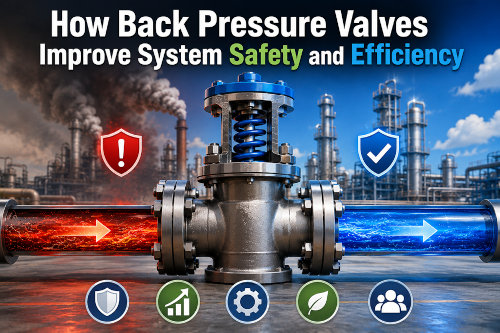
Key Takeaways
- Back pressure valves maintain stable upstream pressure, improving both safety and operational efficiency.
- Consistent pressure control helps protect pumps, compressors, pipelines, and other critical equipment.
- Pressure regulation reduces energy consumption, equipment wear, and unplanned maintenance costs.
- Industries such as oil and gas, pharmaceuticals, chemical processing, and water treatment rely heavily on back pressure valves.
- Combining back pressure valves with safety relief valves creates a comprehensive pressure protection system.
Industrial systems that handle gases, steam, or liquids depend on precise pressure control to operate safely and efficiently. Whether in chemical processing plants, oil and gas facilities, pharmaceutical manufacturing, or power generation systems, uncontrolled pressure can lead to equipment damage, production downtime, safety hazards, and costly maintenance. This is where the importance of a back pressure valve becomes clear.
Back pressure valves are designed to maintain a specific upstream pressure by relieving excess pressure whenever the system exceeds preset limits. These valves play a critical role in protecting pipelines, pumps, compressors, and other process equipment while also improving system performance and operational reliability. Leading manufacturers such as Conbraco Industries have developed high-quality pressure control solutions that industries trust for demanding applications.
In this blog, we will explore how back pressure valves improve system safety and efficiency, their working principles, applications, benefits, and how they complement safety devices like the Kunkle Safety Relief Valve.
What Is a Back Pressure Valve?
A back pressure valve is a pressure-regulating valve installed in a piping system to maintain a predetermined upstream pressure. Unlike standard relief valves that only open during emergency overpressure situations, back pressure valves continuously regulate pressure during normal operation.
These valves automatically open when upstream pressure rises above the set point and close once the pressure returns to acceptable levels. This helps maintain stable flow conditions throughout the system.
Industries often use a back pressure valve in applications involving:
- Pumps and compressors
- Chemical dosing systems
- Steam systems
- Oil and gas pipelines
- Water treatment plants
- Process manufacturing operations
Modern valve manufacturers like Conbraco Industries offer durable pressure control valves engineered for high-temperature, corrosive, and high-pressure environments.
How Back Pressure Valves Work
The operation of a back pressure valve is relatively simple but extremely effective. The valve remains closed until the upstream pressure reaches the preset value. Once the pressure exceeds the desired limit, the valve begins to open gradually, allowing excess fluid or gas to bypass or return to a lower-pressure area.
The valve continuously modulates its position to maintain stable upstream pressure. This automatic adjustment ensures the system operates within safe and efficient parameters.
Key components typically include:
- Spring-loaded diaphragm or piston
- Pressure sensing mechanism
- Valve seat and disc
- Adjustable pressure settings
- Corrosion-resistant body materials
The precise operation of a back pressure valve helps avoid pressure fluctuations that could otherwise damage sensitive equipment or reduce production efficiency.
Why Pressure Control Is Essential
Pressure instability is one of the most common causes of industrial equipment failure. Excess pressure can lead to:
- Pipe ruptures
- Pump seal failures
- Equipment overheating
- Reduced product quality
- Increased maintenance costs
- Dangerous workplace accidents
By maintaining consistent upstream pressure, back pressure valves help eliminate these risks. Stable pressure also improves process accuracy and operational consistency across manufacturing systems.
For industries handling hazardous fluids or steam, pressure control becomes even more important. Safety standards often require multiple layers of protection, including pressure regulators and emergency relief devices such as the Kunkle Safety Relief Valve.
Improving System Safety with Back Pressure Valves
1. Preventing Overpressure Conditions
The primary safety benefit of a back pressure valve is preventing excessive pressure buildup. Without proper pressure regulation, sudden pressure spikes can damage equipment and create unsafe operating conditions.
Back pressure valves automatically release excess pressure before it reaches dangerous levels. This proactive control minimizes the risk of catastrophic failures.
2. Protecting Pumps and Compressors
Pumps and compressors are highly sensitive to pressure fluctuations. Excessive back pressure can overload motors, damage seals, and reduce equipment lifespan.
Installing a properly sized back pressure valve helps maintain ideal operating pressure, ensuring smooth pump performance and reducing wear on internal components.
3. Reducing System Shock
Rapid pressure changes can create hydraulic shock or water hammer within pipelines. These sudden pressure surges can crack pipes, loosen fittings, and damage instrumentation.
A back pressure valve stabilizes flow and pressure conditions, significantly reducing the likelihood of shock-related damage.
4. Enhancing Worker Safety
Industrial facilities handling steam, chemicals, or compressed gases face serious safety risks if pressure systems fail. Maintaining controlled pressure protects employees from hazardous leaks, explosions, or equipment ruptures.
Pressure protection systems often combine regulating valves with emergency devices like the Kunkle Safety Relief Valve for comprehensive safety management.
How Back Pressure Valves Improve Efficiency
Stable Process Performance
Consistent pressure is essential for maintaining accurate flow rates and process conditions. Pressure fluctuations can affect product quality, chemical mixing accuracy, and system reliability.
A back pressure valve helps ensure stable operation, which improves production consistency and reduces waste.
Lower Energy Consumption
Uncontrolled pressure systems often force pumps and compressors to work harder than necessary. By maintaining optimized pressure levels, back pressure valves reduce unnecessary energy consumption and improve equipment efficiency.
This leads to lower operational costs over time.
Reduced Equipment Wear
Pressure instability creates stress on mechanical components. Over time, this increases maintenance requirements and shortens equipment lifespan.
Stable pressure control minimizes mechanical strain, allowing equipment to operate more efficiently with fewer breakdowns.
Improved Flow Control
Many industrial systems rely on precise flow regulation. Back pressure valves help maintain constant flow conditions by balancing upstream pressure levels.
This is especially important in chemical processing, dosing systems, and fluid transfer applications.
Applications of Back Pressure Valves
Chemical Processing Plants
Chemical manufacturing requires accurate pressure control for safe reactions and consistent product quality. Back pressure valves help regulate reactor pressure and protect processing equipment.
Oil and Gas Industry
Oil and gas systems frequently experience fluctuating pressures. Back pressure valves maintain stable pipeline conditions and help protect compressors and separators.
Pharmaceutical Manufacturing
Pharmaceutical production demands highly controlled environments. Pressure regulation helps maintain sterile conditions and accurate dosing processes.
Steam Systems
Steam applications rely on controlled pressure for efficient heat transfer and energy management. Back pressure valves prevent pressure surges and improve steam system performance.
Water Treatment Facilities
Water treatment systems use pressure control valves to regulate filtration, chemical injection, and pump operation.
The Role of Conbraco in Pressure Control Solutions
Conbraco Industries is recognized for manufacturing reliable industrial valves and pressure control products. Their valves are widely used across commercial and industrial applications because of their durability, precision engineering, and long service life.
Industries choose Conbraco products because they offer:
- High-performance valve construction
- Corrosion-resistant materials
- Reliable pressure regulation
- Easy maintenance
- Compliance with industry safety standards
Their expertise in pressure management solutions makes them a trusted name in industrial flow control.
Back Pressure Valves vs. Safety Relief Valves
Although both devices deal with pressure control, they serve different purposes.
Back Pressure Valve
- Maintains continuous upstream pressure
- Operates during normal system conditions
- Improves efficiency and stability
- Modulates pressure automatically
Kunkle Safety Relief Valve
- Activates during emergency overpressure situations
- Protects equipment from dangerous pressure buildup
- Opens rapidly when pressure exceeds safety limits
- Provides critical emergency protection
The Kunkle Safety Relief Valve is commonly used alongside back pressure valves for complete pressure protection systems.
Together, these components provide both operational efficiency and emergency safety protection.
Selecting the Right Back Pressure Valve
Choosing the correct valve depends on several important factors:
Pressure Range
The valve must handle the system’s operating and maximum pressure requirements.
Fluid Compatibility
Valve materials should resist corrosion or chemical reactions with the process media.
Temperature Conditions
High-temperature systems require specially designed valve materials and seals.
Flow Capacity
The valve must support the required flow rates without causing excessive restriction.
Maintenance Requirements
Easy-to-maintain valves reduce downtime and operational costs.
Working with experienced valve manufacturers such as Conbraco Industries helps ensure the correct solution for your application.
Maintenance Tips for Long-Term Performance
Regular maintenance is essential for keeping pressure control systems operating efficiently.
Best practices include:
- Inspect valves regularly for leaks or corrosion
- Verify pressure settings periodically
- Clean internal components when necessary
- Replace worn seals and springs
- Test emergency safety valves routinely
Proper maintenance extends valve lifespan and ensures reliable system protection.
Conclusion
A back pressure valve is a critical component for maintaining safe and efficient industrial operations. By controlling upstream pressure, these valves protect equipment, reduce energy consumption, improve process consistency, and minimize maintenance costs.
Industries across chemical processing, oil and gas, pharmaceuticals, water treatment, and power generation rely on advanced pressure control solutions from manufacturers like Conbraco Industries to achieve dependable performance.
When combined with emergency protection devices such as the Kunkle Safety Relief Valve, back pressure valves create a comprehensive pressure management system that enhances both operational efficiency and workplace safety.
Investing in high-quality pressure control technology is not just about protecting equipment – it is about improving productivity, ensuring safety compliance, and supporting long-term operational success.
FAQs
What is a back pressure valve?
A back pressure valve is a pressure-regulating device that maintains a predetermined upstream pressure within a system. It automatically opens when pressure exceeds the set point and closes when pressure returns to normal levels.
How does a back pressure valve improve industrial safety?
Back pressure valves help prevent dangerous overpressure conditions that can damage equipment or create safety hazards. By maintaining stable operating pressures, they reduce the risk of leaks, ruptures, and system failures.
What industries commonly use back pressure valves?
Back pressure valves are widely used in chemical processing, oil and gas operations, pharmaceutical manufacturing, water treatment facilities, and steam systems. These industries depend on precise pressure control to ensure safe and efficient operations.
What is the difference between a back pressure valve and a safety relief valve?
A back pressure valve continuously regulates pressure during normal operations, helping maintain system stability and efficiency. A safety relief valve activates only during emergency overpressure situations to protect equipment and personnel from dangerous pressure levels.
Why is regular maintenance important for pressure control valves?
Routine inspections and maintenance help ensure valves operate accurately and reliably over time. Proper upkeep reduces downtime, extends equipment lifespan, and supports long-term system safety and performance.