Photo credit: Wolfgang Weiser / Pexels
Key Takeaways
- Modern harvesting vehicles help farmers complete large-scale harvests faster, more accurately, and with lower labor requirements.
- Specialized machines such as combines, forage harvesters, potato harvesters, and grape harvesters are designed to meet the specific needs of different crops.
- Mechanized harvesting can improve crop quality by reducing damage, minimizing losses, and shortening the time between harvesting and transportation.
- Advanced harvesting equipment can also improve worker safety and operational efficiency while helping farms address agricultural labor shortages.
- Jose M. Gracia Harvesting, Inc. demonstrates how a large vehicle fleet, worker training, and disciplined fleet management can support reliable agricultural operations.
Jose M. Gracia Harvesting, Inc. has served as a central hub for a large-scale harvesting enterprise since Jose M. Gracia founded the company in 1992. Under his leadership, the business has grown into one of the country’s prominent agricultural labor contractors, supplying farmers throughout the eastern United States with legal migrant workforces through the H-2A visa program. Jose M. Gracia Harvesting, Inc. has developed and manages a fleet of more than 300 vehicles that support daily operations, including converted buses designed to transport watermelons and cantaloupes in shaded, secure conditions, as well as vehicles that move farmworkers and produce between fields and processing facilities. The company also maintains extensive worker training programs covering field sanitation, tractor and machinery safety, heat stress prevention, and emergency response.
By keeping most vehicles within a single state, the company reduces mileage and maintenance costs while extending vehicle lifespan, reflecting the same operational discipline that has defined its decades of steady growth.
Harvesting is one of the most important stages of farming because it marks the point when months of planning, planting, and crop management finally produce a marketable yield. Completing the harvest efficiently is essential to preserving crop quality, minimizing losses, and maximizing profitability.
Modern harvesting vehicles have transformed agriculture by replacing labor-intensive methods with specialized machinery that can harvest crops quickly and accurately.
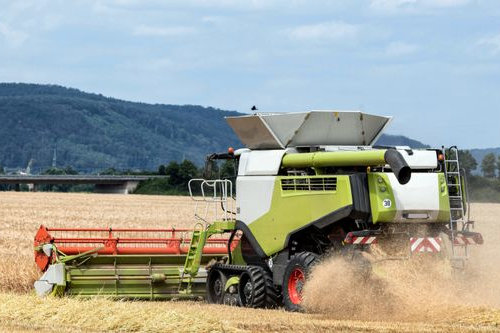
The combine harvester is one of the most widely used harvesting vehicles in modern agriculture. Designed primarily for grains such as wheat, corn, barley, oats, soybeans, and rice, a combine performs three major functions in one operation: reaping, threshing, and cleaning.
Instead of requiring separate machines for each task, a combine harvests the crop, separates the grain from the stalks, and removes unwanted debris before collecting the grain in a storage tank.
Forage harvesters are essential pieces of equipment for farms that produce forage crops. Forage harvesters chop entire plants such as corn, alfalfa, grass, and sorghum into small pieces for livestock feed or silage production.
The chopped material is then transferred directly into trailers traveling alongside the harvester. High-capacity forage harvesters enable livestock farms to process large amounts of feed quickly while maintaining consistent chop sizes that improve silage quality and feed digestibility.
Potato harvesters simplify the process of lifting potatoes from the soil while minimizing damage to the crop. These machines dig beneath the rows, loosen the soil, and separate potatoes from rocks, dirt, and plant debris using conveyors and vibrating screens.
The cleaned potatoes are then transferred into storage bins or transport vehicles. Mechanical harvesting reduces bruising, improves efficiency, and significantly lowers labor costs compared to manual harvesting methods.
Similarly, beet harvesters are designed specifically for sugar beets and other root crops. These machines remove foliage, lift the roots from the ground, clean away excess soil, and store the harvested crop before unloading into trucks.
Their precision helps reduce crop loss while increasing harvesting speed. Modern beet harvesters also feature advanced guidance systems that improve row accuracy and minimize soil disturbance.
Grape harvesters have become increasingly common in vineyards around the world. Mechanical grape harvesters use gentle shaking mechanisms to separate grapes from the vines while leaving the plants largely intact.
Conveyors then collect the fruit and remove leaves, stems, and debris before transferring the grapes into collection bins. Although hand harvesting is popular for premium wine production, mechanical harvesters allow vineyards to complete harvests quickly when grapes reach their ideal ripeness, especially during short harvesting windows.
Nut harvesting equipment is specifically designed for crops such as almonds, walnuts, pecans, and pistachios. Tree shakers vibrate the trunks to release mature nuts, while sweepers gather them into rows and pickup machines collect them for transport.
This coordinated harvesting system enables growers to process large orchards efficiently while reducing manual labor and shortening harvest times.
Fruit harvesting platforms and self-propelled orchard harvesters assist workers in collecting apples, pears, citrus fruits, cherries, and other tree-grown produce. These vehicles provide elevated work platforms that improve safety and increase harvesting efficiency.
Some advanced systems include conveyor belts that transport harvested fruit directly into collection bins, reducing bruising and improving product quality.
Rice harvesters are specially adapted to operate in wet, muddy field conditions. While many rice farms use combines equipped with specialized rice headers and tracks instead of wheels, these machines are designed to minimize soil compaction while efficiently harvesting mature rice plants.
The benefits of harvesting vehicles extend beyond faster operations. Mechanized harvesting significantly reduces labor requirements, helping farmers address labor shortages while lowering production costs.
FAQs
Why are harvesting vehicles important in modern agriculture?
Harvesting vehicles allow farmers to collect crops more quickly and efficiently than many traditional manual methods. They can reduce labor requirements, lower production costs, and help preserve crop quality.
What does a combine harvester do?
A combine harvester performs three major tasks in one operation: reaping, threshing, and cleaning. It separates grain from stalks and debris before collecting the usable grain in a storage tank.
What types of crops can specialized harvesting machines handle?
Different harvesting vehicles are designed for crops including grains, forage, potatoes, sugar beets, grapes, nuts, tree fruits, and rice. Specialized equipment helps farmers address the unique harvesting requirements of each crop.
How do harvesting vehicles improve crop quality?
Modern harvesting machines can reduce bruising, crop loss, and unnecessary handling during collection. Features such as conveyors, precision guidance systems, and specialized harvesting mechanisms can help maintain quality while increasing speed.
How does Jose M. Gracia Harvesting, Inc. support large-scale agricultural operations?
Jose M. Gracia Harvesting, Inc. manages a fleet of more than 300 vehicles that support the transportation of farmworkers, watermelons, cantaloupes, and other produce. The company also emphasizes worker training, safety, sanitation, emergency response, and disciplined vehicle management.
About Jose M. Gracia Harvesting, Inc.
Jose M. Gracia Harvesting, Inc. has served American agriculture since 1992 as one of the country’s prominent migrant labor contractors, supplying legal workforces through the H-2A visa program to farmers across the eastern United States. Under the leadership of founder Jose M. Gracia, the company manages a fleet of more than 300 vehicles supporting daily field operations and maintains extensive worker training programs covering safety, sanitation, and emergency response. The company continues to emphasize reliability and safety throughout its operations.