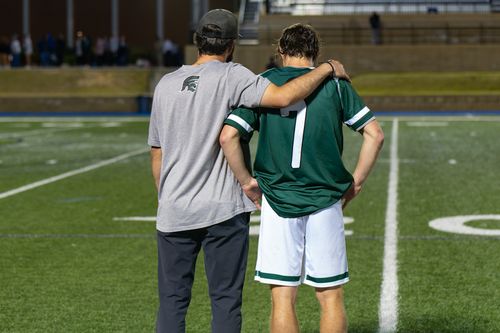
photo credit: Mike Lensing / Pexels
Key Takeaways
- How coaches respond to defeat can influence whether athletes develop resilience or become discouraged by setbacks.
- Acknowledging disappointment while focusing on controllable factors helps teams learn without becoming overwhelmed by a loss.
- Coaches should allow athletes time to process emotions before introducing detailed performance reviews and strategic adjustments.
- Private conversations, realistic practice scenarios, and consistent leadership help build trust and prepare teams for adversity.
- Tracking effort, improvement, and execution alongside game results gives coaches a broader understanding of team development.
Elvis Parra has spent more than two decades building a career in logistics and operations, most recently serving since 2015 as operations manager at Prestige Express in Newark, New Jersey, where he oversees daily office functions and workflow efficiency. He previously spent a decade as president of E&K Trucking and began his transportation career in 2001 as an owner-operator with Ironbound Express. Parra holds an associate degree in liberal arts from Borough of Manhattan Community College along with hazardous material and double-tanking endorsements. Outside of his professional work, Elvis Parra has coached youth soccer, baseball, and basketball teams, earning recognition from the New Jersey Recreation and Park Association for his work with young athletes.
That coaching experience gives him a firsthand perspective on how coaches help players process losses and setbacks constructively, a skill that separates resilient teams from ones that struggle to recover.
Every team loses. Even the most talented rosters absorb bad bounces, blown calls, and games that simply slip away.
What separates lasting programs from struggling ones is rarely talent alone. Instead, it is how the coaching staff handles the aftermath. A loss is a data point, not a verdict, and the way a coach frames it shapes whether a team spirals or sharpens.
The first words after a defeat set the emotional tone for the days that follow. Coaches who default to blame or panic teach athletes to fear failure rather than learn from it.
The more effective approach is to acknowledge the disappointment honestly (pretending a loss doesn’t hurt is its own mistake) while immediately pointing to what is controllable. “We lost the game, but here’s what we controlled well” keeps players anchored in effort and process rather than outcome.
Trying to break down film minutes after a tough loss usually backfires. Athletes are too flooded with adrenaline and disappointment to absorb technical feedback. Give the emotion its own space, and save the film session and strategic adjustments for the next practice, when minds are calmer and more receptive.
This separation prevents setbacks from curdling into shame and instead routes them toward useful analysis.
Players watch how coaches carry themselves far more than they listen to speeches about “bouncing back.” A coach who stays composed, still shows up prepared, and treats the next practice with normal intensity signals that one bad result doesn’t define the season. Conversely, a coach who sulks, snaps, or overreacts teaches the team that setbacks are catastrophic.
Resilience is caught, not just taught. Team losses often expose individual struggles, like problems off the field or the court, a lapse in conditioning, or a confidence dip.
The best coaches follow up privately, not to assign blame, but to problem-solve. A five-minute conversation that asks “What did you notice?” before offering correction builds ownership and trust far more effectively than a public callout.
Teams that treat every loss as a crisis burn out faster than those that expect adversity as part of competition.
Coaches can normalize this in practices. For example, the team can simulate being down late, playing shorthanded, or facing a bad call. This way, when something goes wrong in a real game, it feels familiar, rather than a destabilizing shock that prompts panic.
The most effective coaches keep records beyond win-loss columns. They track effort, improvement, and execution under pressure. When a team loses but hits those internal benchmarks, that’s worth celebrating and naming explicitly.
It reinforces that growth and results aren’t always in sync in the short term, but they usually converge over a season.
Handling losses well is not about minimizing pain or manufacturing positivity. Instead, it’s about giving setbacks a clear, constructive place to land.
Teams that process defeat with honesty, structure, and calm leadership tend to outperform teams that either overreact or ignore hard results. In the end, how a team handles its worst nights often predicts how it plays on its best ones.
FAQs
How should coaches respond immediately after a team loses?
Coaches should acknowledge the disappointment honestly while reminding players of the aspects of performance they could control. Detailed analysis is often more productive at the next practice, when emotions have settled and athletes are more receptive to feedback.
Why is emotional resilience important in youth sports?
Emotional resilience helps young athletes recover from disappointment, manage pressure, and maintain confidence after difficult results. These skills can also support their personal development beyond sports.
How can coaches teach players to handle setbacks?
Coaches can introduce challenging practice scenarios, encourage reflection, and demonstrate calm behavior when things go wrong. These experiences help athletes become more comfortable responding constructively to adversity.
Why should coaches speak privately with players after a difficult performance?
Private conversations give athletes an opportunity to discuss individual challenges without feeling publicly embarrassed or blamed. Asking players to reflect on their own performance can also encourage accountability and build trust.
Should coaches measure success beyond wins and losses?
Yes, tracking effort, improvement, teamwork, and execution under pressure provides a more complete picture of a team’s progress. These measures can help coaches recognize meaningful development even when the final result is disappointing.
About Elvis Parra
Elvis Parra is a logistics and operations professional based in Closter, New Jersey, with more than two decades of experience in the trucking industry. He has served as operations manager at Prestige Express since 2015, following a decade as president of E&K Trucking and earlier work as an owner-operator with Ironbound Express. Parra holds an associate degree in liberal arts from Borough of Manhattan Community College. Outside of his career, he is an active youth sports coach, leading soccer, baseball, and basketball teams in his community.