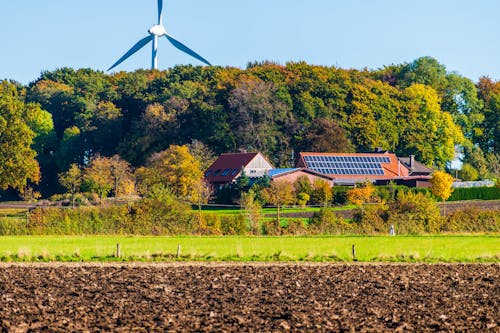
photo credit: Sergej / Pexels
Key Takeaways
- Decentralized energy systems like solar, microgrids, and wind are often the most practical solutions for rural and off-grid communities.
- Affordability remains a major barrier, making flexible financing models such as pay-as-you-go essential for adoption.
- Effective energy solutions must be tailored to local geography, climate, and resource availability for reliability.
- Simple, modular, and scalable designs improve maintenance, durability, and long-term usability in resource-limited areas.
- Community involvement and supportive policy frameworks are critical for successful implementation and long-term sustainability.
Sayan Biswas is an engineer, entrepreneur, and policy professional whose work focuses on sustainable energy systems and innovation. As founder and CEO of TerraCare Energy in Minnesota, Sayan Biswas leads efforts to develop scalable energy technologies, including a patented prototype designed to generate between 10 and 100 kWh per day. His background includes serving as a science and technology policy fellow at the U.S. Department of Energy, where he supported commercialization strategies for advanced technologies across sectors such as artificial intelligence, quantum systems, and critical materials.
With prior experience at Sandia National Laboratories, Praxair, and Purdue University, as well as leadership of a multimillion dollar research lab, his work reflects a strong connection to designing practical energy solutions. His expertise aligns with the challenges of delivering clean energy to rural and off grid communities.
Advancing Clean Energy Solutions for Rural and Off-Grid Communities
Expanding access to clean energy is both a global and a local challenge. In rural and off-grid communities, energy systems must be designed with a clear understanding of context. Infrastructure limitations, economic constraints, geography, and social factors all shape what solutions are feasible and sustainable. Approaches that succeed in urban or industrial settings do not always translate, which makes thoughtful, context-driven design essential.
One of the defining challenges in these communities is the absence of centralized infrastructure. Extending traditional power grids over long distances can be prohibitively expensive and technically difficult, especially in areas with low population density. As a result, decentralized systems such as solar home systems, microgrids, and small-scale wind installations have emerged as practical alternatives. According to the International Energy Agency, decentralized renewable solutions are often the most cost-effective way to provide electricity to remote populations, particularly in parts of sub-Saharan Africa and South Asia.
Affordability is another critical factor. Even when clean energy technologies are available, upfront costs can limit adoption. Designing solutions for these environments often requires new financing models, such as pay-as-you-go systems or community ownership structures. These approaches allow households to access electricity without large initial investments, spreading costs over time in a way that aligns with local income patterns. Evidence from the World Bank shows that such models have significantly expanded access to solar energy in underserved regions.
Geography and climate also play a major role in shaping energy design. Solar power may be abundant in some regions, while others may benefit more from wind, small hydro, or hybrid systems that combine multiple sources. In many cases, reliability depends on tailoring systems to local environmental conditions rather than relying on a single technology. For example, pairing solar generation with battery storage can help maintain consistent power during nighttime or cloudy periods, improving resilience.
Constraints in these settings often drive innovation rather than limit it. Limited resources encourage the development of modular, scalable technologies that can be expanded as demand grows. Systems are often designed to be easy to install, maintain, and repair, recognizing that technical expertise and spare parts may not be readily available. This has led to simpler, more robust designs that prioritize durability and user accessibility over complexity.
Community involvement is another key element of successful energy solutions. Projects that engage local users in planning and decision-making tend to achieve better outcomes. This includes understanding how energy will be used, whether for household lighting, agricultural processing, education, or small businesses. Aligning energy systems with real needs helps ensure that they deliver meaningful economic and social benefits. Research from the United Nations Development Programme highlights that community-driven approaches improve both adoption rates and long-term sustainability.
Policy and institutional support also influence success. Clear regulations, supportive incentives, and coordination between governments, private companies, and development organizations can accelerate deployment. Without this support, even well-designed technologies may struggle to scale.
Designing clean energy solutions for rural and off-grid communities is not simply a matter of transferring existing technologies. It requires adapting to local realities and embracing constraints as opportunities for smarter innovation. By focusing on affordability, flexibility, and community engagement, these solutions can expand energy access while supporting broader goals of economic development and environmental sustainability.
FAQs
Why are decentralized energy systems important for rural areas?
They provide a practical alternative to extending traditional power grids, which can be expensive and difficult in remote locations. These systems deliver electricity more efficiently to low-density populations.
What makes clean energy solutions affordable in off-grid communities?
Innovative financing models like pay-as-you-go and community ownership reduce upfront costs. This allows households to access energy while spreading payments over time.
How does geography affect energy system design?
Local conditions such as sunlight, wind availability, and terrain determine which energy sources are most effective. Tailoring systems to these factors improves reliability and performance.
Why is simplicity important in energy system design?
Simple and modular systems are easier to install, maintain, and repair, especially in areas with limited technical resources. This increases long-term functionality and adoption.
How does community involvement impact energy projects?
Engaging local communities ensures solutions match real needs and encourages long-term use. It also improves adoption rates and overall project sustainability.
About Sayan Biswas
Sayan Biswas is the founder and CEO of TerraCare Energy and an experienced engineer focused on sustainable energy and technology policy. He has worked with organizations including the U.S. Department of Energy, Sandia National Laboratories, and Purdue University, and has led a federally funded research lab. He holds a doctorate in aerospace engineering from Purdue University and has received honors such as the Springer Thesis Award. He is also active in professional engineering organizations and STEM mentorship initiatives.