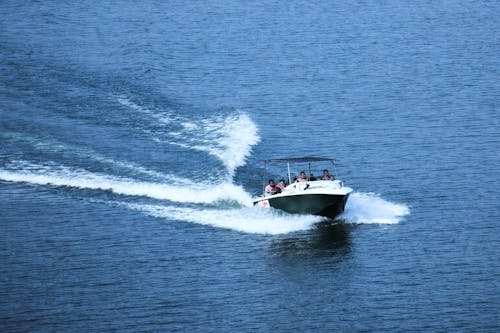
photo credit: Sayan Samanta / Pexels
Key Takeaways
- Boating safety begins with understanding and following local, state, and federal regulations, which can vary by location.
- Basic navigation rules, such as maintaining safe speed, keeping a proper lookout, and yielding appropriately, are essential for preventing accidents.
- All boats must carry required safety equipment, including life jackets, signaling devices, and fire extinguishers, depending on vessel type and size.
- Boating under the influence is illegal and significantly increases the risk of accidents and injuries on the water.
- Completing a boating education course can improve safety awareness and is often required to obtain a boating license.
Ellis Abramson is an entrepreneur and business leader with more than three decades of experience across hospitality, real estate, and commercial manufacturing. As president and CEO of Bramson House, he coordinates sales, purchasing, onsite installation, and manufacturing while leading a company that serves major hotels throughout the United States. His work also includes co-ownership of MJER 2000 LLC, which operates the Hampton Inn and Suites in Rockville Centre, New York, and ownership of Abramson Enterprises LLC, a real estate holding company in Freeport, New York. With experience managing operations, property standards, and business growth, Ellis
Abramson brings a practical leadership perspective to topics that depend on preparation, compliance, and safety, including boating rules and regulations.
An Introduction to Important Boating Rules and Regulations
Boating is a popular activity in the United States. Roughly 85 million Americans go boating at least once per year, and up to 15 million families own one or more boats, accounting for nearly 12 percent of American households. Owning a boat or spending time on the water as a passenger provides an array of benefits, including reduced stress levels, healthy vitamin D exposure, and improved cardiovascular fitness. To improve the chances of enjoying all the benefits of boating and to reduce the odds of an accident or injury, individuals must familiarize themselves with all the rules and regulations of boating.
Learning and adhering to basic boating laws represents one of the easiest steps a person can take to protect their safety while boating. Local, state, and federal lawmakers develop boating laws to protect drivers, passengers, and swimmers, with an overriding goal of preventing accidents, injuries, and fatalities, in addition to protecting sensitive environments from pollution and other issues.
To start, boaters must understand that the boating laws and regulations can vary considerably from one location to the next. It is critically important that boating enthusiasts educate themselves on laws and regulations in the regions before navigating through unfamiliar waters. That said, a few laws apply in virtually all jurisdictions and open water scenarios.
For example, captains must follow general navigation rules, or “boating rules of the road,” at all times. Important elements of navigation rules include maintaining safe, controllable speeds at all times, positioning someone as a consistent lookout, powerboats yielding to sailboats and non-motorized vessels, and yielding to the starboard vessel when crossing.
Other important regulations apply to boaters and vehicles before departure. A person must register their boat and always display the relevant tags and decals. Typically, all children must wear life jackets while boating, though the exact age requirements vary by location. That said, all boat operators must have enough personal flotation devices (PFDs) for every person onboard. They must keep PFDs in working order and store them in a readily accessible part of the boat.
Boating under the influence laws are also nationally observed. No person can legally operate a vessel while under the influence of alcohol or other prohibited substances. Other widespread laws apply to the basic safety equipment that all vessels must carry, including safety lights, certain sound signaling devices, such as horns and bells, and fire extinguishers. If a vessel measures 16 feet or longer, the operator must store one or more throwable flotation devices on board. Motorized vessels have different safety equipment requirements compared to non-motorized boats. Boats operating in coastal waters also carry distinct equipment requirements, such as the need for lights, flares, and other visual distress signals.
Many boating laws and regulations are maintained and enforced by the US Coast Guard. The Coast Guard website, uscg.mil, provides boaters with a depth of pertinent information, including specifications for necessary onboard equipment, examples of required documentation, and additional safety specifics. Again, boating laws vary by location, and Coast Guard vessels enforce special regulations on certain waterways, often in relation to environmental compliance requirements. American boaters can refer to federal boating rules by visiting uscgboating.org.
States typically require the completion of a boater education course before a person can obtain a boating license. Individuals should consider expanding their knowledge by completing a boating safety course.
FAQs
Do boating laws differ depending on location?
Yes, boating laws vary by state and local jurisdiction, so it is important to understand the specific rules where you plan to operate a vessel. Checking local regulations before boating in unfamiliar waters helps ensure compliance and safety.
What are the basic “rules of the road” for boating?
These include maintaining a safe speed, keeping a proper lookout, and following right-of-way rules such as yielding to sailboats and vessels on your starboard side. These guidelines help reduce collisions and keep waterways organized and safe.
What safety equipment is required on a boat?
Most boats must carry personal flotation devices (PFDs) for each passenger, along with items like fire extinguishers, sound signaling devices, and navigation lights. Requirements may vary depending on the size and type of the vessel.
Is it illegal to operate a boat under the influence?
Yes, boating under the influence of alcohol or drugs is illegal and enforced nationwide. It impairs judgment and reaction time, increasing the likelihood of serious accidents on the water.
Do I need a license or training to operate a boat?
In many states, completing a boating safety course is required to obtain a license or certification. Even when not mandatory, formal training helps build knowledge and confidence for safer boating experiences.
About Ellis Abramson
Ellis Abramson is the president and CEO of Bramson House, a commercial drapery fabrication company serving the hospitality industry. He became owner of the company in 1986 after it was founded by his parents, Jules and Betty Abramson, in 1971. His business interests also include MJER 2000 LLC, which operates the Hampton Inn and Suites in Rockville Centre, New York, and Abramson Enterprises LLC, a real estate holding company based in Freeport, New York.