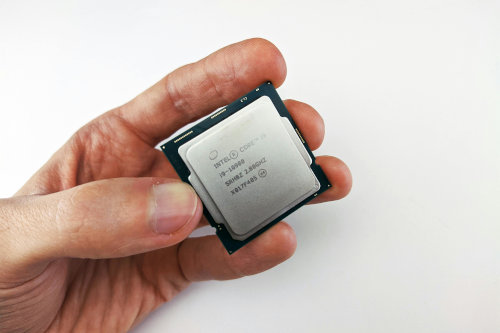
photo credit: Andrey Matveev / Pexels
Key Takeaways
- Microprocessors are essential components that power modern computing devices, from smartphones to industrial systems.
- The core structure includes key elements such as the arithmetic logic unit (ALU), control unit (CU), registers, buses, and cache memory.
- Architectural approaches like RISC and CISC influence processor performance, efficiency, and application suitability.
- Microprocessor design involves multiple stages, including conceptual planning, architecture definition, logic design, and simulation testing.
- Advances in microprocessor design rely on the integration of hardware engineering, software modeling, and semiconductor technology.
Zia Shlaimoun is a technology entrepreneur and engineer whose career has been closely tied to advancements in microprocessor design and energy efficiency. Beginning his professional journey at IBM’s European Research Center in Hursley, UK, Zia Shlaimoun contributed to the development of emerging technologies as part of a collaborative research team. He later worked at Data Dynamics and co-owned Jilutech Systems, gaining experience in product development, distribution, and systems engineering. As CEO of Atto Electric, Ltd., he led the creation of patented energy-saving technologies that were adopted globally, reducing carbon emissions significantly.
Now based in the United States, his work continues to reflect a strong connection to microprocessor innovation and performance optimization, making his background highly relevant to understanding how modern processors are structured and designed.
Microprocessors are the core driving forces behind modern computing systems. They power devices ranging from smartphones and personal computers to vehicles and industrial machinery. Every task a computer performs depends on these compact silicon components. Although they are extremely small, microprocessors rank among the most sophisticated inventions developed by humans, shaped by years of progress in computer architecture, materials science, and semiconductor production. Gaining insight into how they are designed and manufactured highlights the close integration of software modeling, hardware engineering, and nanotechnology that drives today’s digital world.
To begin, microprocessors form the foundation of modern computing systems, and their architecture consists of several essential components that enable instruction execution. One of the most important elements is the arithmetic logic unit (ALU), which performs mathematical calculations and logical operations. It manages tasks such as addition and subtraction, as well as logical operations such as AND, OR, and NOT, ensuring that data can be processed and manipulated efficiently.
In addition, the control unit (CU) works alongside the ALU, managing and directing the processor’s operations. It interprets instructions retrieved from memory and coordinates data movement within the system. The CU sends appropriate signals to different components, ensuring that instructions are carried out in a structured, orderly manner. So, its collaboration with the ALU is vital for handling complex operations.
Registers are small, high-speed storage areas that hold frequently used data and instructions. Compared to main memory, they provide much faster access, significantly boosting the overall efficiency of the processor. The quantity and size of these registers vary depending on the microprocessor’s design, directly influencing its performance and capabilities. Equally important, bus systems and their interfaces provide pathways for data to move within the processor. These connections, including address and data buses, link internal components and facilitate communication between the CPU and external devices, such as input and output units. As a result, they play a key role in ensuring smooth data transfer throughout the system.
Cache memory is a high-speed intermediary between the CPU and main memory. Storing frequently accessed data and instructions reduces delays and improves processing speed. Its efficiency significantly impacts overall performance by minimizing the time the processor spends retrieving data from slower memory sources.
Microprocessors can be designed using different architectural approaches, such as Reduced Instruction Set Computing (RISC) and Complex Instruction Set Computing (CISC). RISC focuses on a smaller set of simple instructions that can improve performance through streamlined processing. On the other hand, CISC supports a wider range of more complex instructions, enabling tasks to be completed with fewer code lines. Each approach offers distinct advantages, influencing how microprocessors are selected for various applications.
Designing a microprocessor begins with conceptual planning, in which engineers determine the processor’s purpose, expected performance, and constraints on speed, power consumption, and cost. These early decisions shape the instruction set, performance goals, and internal design of the processor.
Subsequently, the architectural design phase defines the processor’s overall structure and functionality. During this stage, engineers establish the instruction set architecture (ISA), which outlines the machine-level instructions the processor can execute. The ISA also determines how software interacts with hardware, including registers, addressing methods, and instruction formats. After defining the ISA, designers create a microarchitecture that implements it, detailing how instructions flow through the system, how memory is managed, and how data paths and control mechanisms are organized.
The process then advances to logic design, where a more detailed representation of the processor is developed. Engineers map out how various functional units, such as ALUs, caches, and instruction decoders, are connected and controlled. This stage involves hardware description languages such as Verilog or VHDL, which allow designers to model complex hardware behavior in a clear, organized way.
Once the logic design stage is finalized, engineers proceed to validate the system using advanced simulation tools. In this phase, test programs are executed on a virtual representation of the processor to confirm that each instruction produces the correct result and that the timing and control signals function as intended. In doing so, any inconsistencies or faults can be identified early and addressed promptly.
FAQs
What is a microprocessor and why is it important?
A microprocessor is a compact integrated circuit that acts as the central processing unit (CPU) of a computer or electronic device. It executes instructions and processes data, enabling devices to perform tasks efficiently. Without microprocessors, modern computing and digital systems would not function.
What are the main components of a microprocessor?
The main components include the arithmetic logic unit (ALU), control unit (CU), registers, bus systems, and cache memory. Each part plays a specific role in processing instructions and managing data flow. Together, they ensure the processor operates efficiently and reliably.
What is the difference between RISC and CISC architectures?
RISC uses a smaller set of simple instructions for faster and more efficient processing, while CISC supports a broader set of complex instructions to reduce the number of steps needed for certain tasks. Each architecture has its advantages depending on the application. The choice often depends on performance goals, power efficiency, and system requirements.
How are microprocessors designed?
Microprocessors are designed through several stages, starting with conceptual planning and moving through architecture design, logic development, and simulation testing. Engineers define instruction sets, create hardware models, and validate performance before manufacturing. This structured process ensures the processor meets performance and reliability standards.
Why is simulation important in microprocessor design?
Simulation allows engineers to test and verify the processor’s functionality before physical production. It helps identify errors, optimize performance, and ensure correct instruction execution. This step reduces development costs and improves the overall quality of the final product.
About Zia Shlaimoun
Zia Shlaimoun is an entrepreneur and engineer with extensive experience in microprocessor-related technologies and energy-efficient innovation. His career includes roles at IBM Hursley, Data Dynamics, and Jilutech Systems, followed by leadership as CEO of Atto Electric, where he developed patented power-saving solutions used worldwide. Recognized with awards such as the European BIC Innovator of the Year and the Barclays Bank Commercial Innovation Award, he is also a Fellow of the Royal Society of Arts.