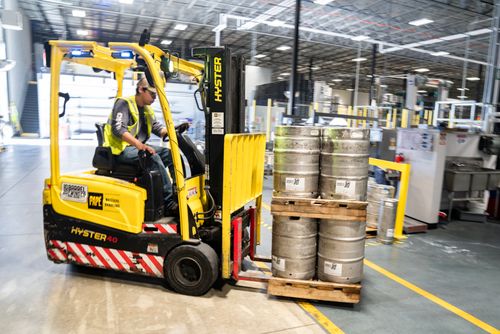
photo credit: ELEVATE / Pexels
Key Takeaways
- SMEs can strengthen supply chain resilience by avoiding excessive dependence on a single supplier for critical goods or materials.
- Working with suppliers that maintain genuine local stock can reduce exposure to long lead times and upstream disruptions.
- Understanding suppliers’ own supply chains gives SMEs greater visibility into risks that may otherwise remain hidden.
- Maintaining deliberate inventory buffers and building disruption costs into pricing can help businesses protect operations and margins.
- Negotiating payment terms and building strong supplier relationships before a crisis can improve an SME’s ability to withstand supply shocks.
Manufacturing firms have spent the last five years getting an unwelcome education in supply chain risk.
Shortages, freight costs, and supplier collapses forced a rethink that smaller businesses outside the sector are only now catching up on. You don’t need a factory floor to borrow their thinking. Here’s what’s worth stealing.
1. Stop treating single-supplier deals as efficient
Manufacturers used to prize lean, single-source arrangements because they kept costs down. Many have since split orders across two or three suppliers, even when it costs slightly more, because one factory fire or customs delay can otherwise stop production dead.
A government review of supply chain vulnerability found that a large share of British manufacturers had already increased domestic sourcing, with a similar number planning to do the same within a year. If your business relies on one supplier for anything critical, that’s the first thing to fix.
2. Buy from people who hold stock, not just people who sell it
A lot of SME supply headaches come from ordering materials with long lead times and no local alternative. Manufacturers increasingly favour suppliers who keep genuine stock on hand rather than ordering on demand.
It’s why companies such as Lawcris, which stocks worktops, MFC, MDF, laminates and fittings and offers a cut-to-length and edging service from its own trade counter, tend to become the reliable option for trades and small manufacturers who can’t afford to wait weeks for a delivery slot.
Local stockholders shorten your exposure when something upstream goes wrong.
3. Know your suppliers’ suppliers
Visibility rarely extends past your direct contact. Dun & Bradstreet’s 2025 manufacturing survey found that only around a third of firms felt confident their supply chain data was accurate enough to act on.
If you don’t know where your supplier sources their raw materials, you’re carrying risk you can’t see, let alone manage.
4. Build in slack deliberately
Just-in-time thinking works brilliantly until it doesn’t. Manufacturers now hold small buffers of critical stock as standard practice, accepting the storage cost as insurance against a bad month.
For an SME, this might just mean keeping a few extra weeks of your best-selling product’s key component rather than ordering to the exact minimum every time.
5. Price in disruption, not just materials
Quotes that assume everything arrives on schedule tend to get quietly abandoned when it doesn’t.
Manufacturing leaders now build contingency time and cost into client-facing timelines rather than treating delays as exceptions. Doing the same protects your margins and your reputation when, not if, something upstream slips.
6. Sort out payment terms before a crisis forces your hand
When a supply shock hits, the businesses that cope best are usually the ones who negotiated decent payment terms while things were calm, not the ones scrambling to renegotiate mid-crisis.
Manufacturers with strong supplier relationships often secure extended terms or priority allocation simply because they’ve paid reliably and communicated honestly over years, not months.
If you’re still on standard 30-day terms with a supplier you depend on heavily, it’s worth having that conversation now, while there’s no pressure attached to it. Suppliers remember who caused them problems during a squeeze, and who didn’t.
Have you learned lessons from manufacturing leaders? Share your experiences in the comments below!
FAQs
Why should SMEs avoid relying on a single supplier?
Depending on one supplier for critical products or materials can leave an SME vulnerable to disruptions such as fires, customs delays, or supplier failures. Using multiple suppliers can provide greater resilience even when diversification comes with somewhat higher costs.
Why is local stock important for supply chain resilience?
Suppliers that maintain stock locally can help businesses avoid lengthy lead times and reduce their exposure to problems further upstream. For SMEs with limited purchasing power or storage capacity, reliable local stock can provide an important operational buffer.
How can an SME improve supply chain visibility?
Businesses should look beyond their direct suppliers and understand where those suppliers obtain important raw materials and components. Greater visibility into the extended supply chain can help SMEs identify risks before they disrupt operations.
Should SMEs keep extra inventory?
Maintaining a modest buffer of critical inventory can provide protection when deliveries are delayed or supply becomes constrained. The appropriate amount depends on the business, but keeping several extra weeks of key components can be an alternative to ordering at the absolute minimum.
Why do supplier relationships matter during supply disruptions?
Strong supplier relationships can make it easier to negotiate extended payment terms or secure priority allocation when supply becomes constrained. Building that trust before a crisis is generally more effective than attempting to renegotiate terms when a disruption is already underway.