
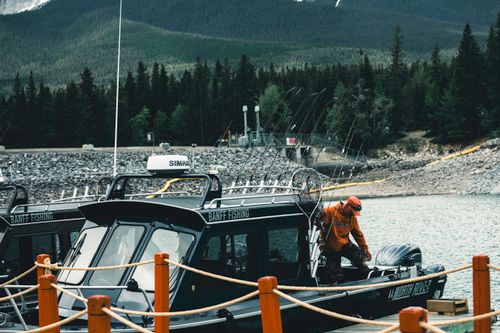
photo credit: Ali Kazal / Pexels
Key Takeaways
- Boat fuel planning is about completing the entire trip safely, not simply having enough fuel to reach the destination.
- The U.S. Coast Guard recommends the one-third rule: one-third of the fuel for going out, one-third for returning, and one-third held in reserve.
- Weather, sea conditions, passenger and gear load, route changes, and return conditions can all affect a boat’s fuel requirements.
- A fuel gauge should be treated as one piece of information rather than a substitute for route planning and a reserve.
- A good float plan and a realistic fuel margin can prevent an ordinary range problem from becoming a much more serious situation on the water.
Fort Lauderdale, Florida entrepreneur Jayne Hammond built a nearly 40-year career at CSI International, Inc., where she served as founder and president, guiding the company from a small family-run business into a large, multi-state corporate organization. Before co-founding CSI International with her husband, Jayne P. Hammond spent nearly two decades in facilities management with a leading global corporation, and earlier in her career she worked as a registered nurse at the Heart Center, assisting physicians who treated cardiac patients. She holds an undergraduate nursing degree from the University of California, Los Angeles.
Outside of her business career, Hammond lists boating among her hobbies, along with fitness and needlepoint crafts, an interest that connects directly to the kind of trip planning every boat owner should understand before heading out on the water.
Some people compare fueling a boat to gassing up a car. Boat fuel planning involves more than checking whether the tank looks ready. A boat trip raises wider questions before departure: where it is going, how it will return, what may change, and whether fuel remains in reserve. Water, weather, load, and the return path all affect the trip.
A boat operator needs more than fuel and a destination. The operator should understand how the boat handles, how much it can safely carry, where passengers should sit, how markers guide the route, and how to get back from the planned destination. Fuel planning fulfills that responsibility because available fuel must support the entire route, not just the first leg.
The one-third rule gives boaters a simple way to build reserve fuel into the trip. That means using one-third of the fuel to go out, one-third to get back, and keeping one-third in reserve. The rule gives boaters a margin rather than treating the tank as available only for the outbound route.
Return trips deserve separate attention because they may not match the outbound leg. Headwinds, current, rougher water, route changes, or navigation mistakes can all change how much fuel the return leg requires. That is why the reserve matters before the boat turns around, not only after the gauge looks low.
Weather gives boaters information they cannot get from looking at the launch area alone. Marine forecasts give boaters wind details, wave information, nearshore roughness, and significant weather risks. Because actual conditions may fall outside forecast ranges, a fuel plan should leave room for conditions that do not align with the easiest route.
Load also changes the calculation. Sea conditions and load can change fuel consumption and range, and extra gear may require more horsepower. Boaters should track the weight of people and gear, check the capacity plate, and ask whether the loaded boat still fits the fuel margin.
If fuel runs low on the water, the backup plan may involve more than finding another pump. A boater may need a gas dock, service station, closer fuel source, or a place to dock while someone secures fuel. The operator may need to secure the boat and get the crew safely ashore before solving the refueling problem.
A fuel gauge should not replace trip planning. Boat fuel gauges can be inaccurate, and readings can change as fuel sloshes in the tank. A boater should treat the gauge as a single reading to check against the planned route, while digital instruments may provide a more accurate measure of actual fuel use.
Boaters should also separate fuel planning from safe refueling procedures. Refueling a boat can involve hatches, passengers, engines, electrical equipment, spilled fuel, ventilation, blowers, bilges, and fuel vapors. Those dockside steps matter, but they do not answer whether the trip itself has enough fuel margin.
Before departure, the operator should decide whether the route, return path, conditions, load, and reserve still fit. If they do not, the safer choice may be to refuel first, shorten the trip, change the route, or wait.
A float plan tells a reliable person where the boat is going and when it should return. At the dock, the tank reading should inform the route decision, not a quick assumption that the boat is ready. The operator needs margin for a harder return, a changed route, or a delayed stop. Good boat fuel planning helps prevent a range problem from becoming something the crew has to solve after the trip is underway.
FAQs
What is the one-third rule for boat fuel?
The U.S. Coast Guard recommends using one-third of the fuel to travel out, one-third to return, and keeping one-third in reserve. The rule is designed to provide a margin for changing conditions and unexpected circumstances rather than treating the entire tank as usable trip fuel.
Why is the return trip important when planning boat fuel?
The return trip may require more fuel than the outbound journey because wind, current, rough water, route changes or delays can alter the boat’s performance and travel time. Planning only for the trip to the destination can leave the operator with too little fuel when it is time to return.
Can weather affect boat fuel consumption?
Weather and water conditions can affect how a boat operates and may cause the operator to change speed or route. Checking the forecast before departure and continuing to monitor conditions while underway can help the operator recognize when the original fuel plan may need to change.
Is a boat’s fuel gauge enough for trip planning?
No. A fuel gauge is useful information, but it should be considered alongside the planned route, expected consumption, weather, boat load and reserve. Fuel can also shift within a tank while the boat is moving, making a single gauge reading an imperfect measure of remaining usable fuel.
What should boaters do before refueling?
Refueling requires its own safety procedures. The U.S. Coast Guard recommends turning off engines and electrical equipment, removing passengers, preventing spills, ventilating appropriately after fueling, and checking for fuel vapors before restarting the engine.
About Jayne P. Hammond
Jayne P. Hammond is a Fort Lauderdale, Florida-based entrepreneur and business executive who spent nearly 40 years as founder and president of CSI International, Inc., guiding the company from a small family business into a multi-state organization. Before that, she spent almost two decades in facilities management with a leading global corporation and earlier worked as a registered nurse at the Heart Center. She holds an undergraduate nursing degree from UCLA and lists boating among her hobbies.

