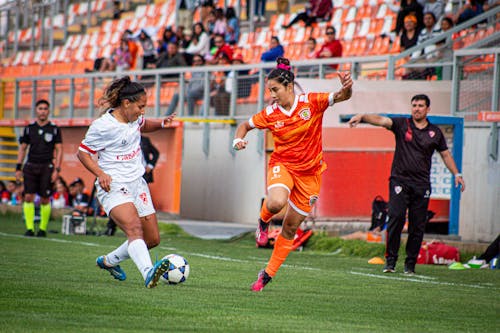
photo credit: Luis Andrés Villalón Vega / Pexels
Key Takeaways
- Organized league soccer introduces structured roles, defined positions, and coordinated team responsibilities compared to casual play.
- Players must adapt to faster pacing, sustained movement, and quicker transitions between attacking and defending.
- Decision-making becomes more critical, with timing and awareness often outweighing individual skill alone.
- Defensive play relies on coordinated teamwork, including pressure, cover, and positional discipline.
- Consistent officiating and formal rules add complexity, requiring players to understand positioning, timing, and game flow.
Francisco Faraco is a New York City based financial executive who provides wealth management solutions while maintaining active involvement in academic mentorship and advisory roles. Francisco Faraco is a member of the New York Society of Security Analysts and a Chartered Financial Analyst charterholder who passed the FINRA Series 7 and NFA Series 3 examinations. He holds advanced degrees from the University of Chicago and American University and contributes to the University of Chicago’s Master of Science in Financial Mathematics program through mentorship and advisory work. While his professional background is rooted in finance, his personal interests include endurance running and athletics.
This perspective aligns with a broader understanding of structured versus informal athletic environments, such as the differences between casual soccer and organized league play.
Key Changes Between Casual Soccer and Organized League Play
Players moving from casual games into school, club, or adult league soccer often notice that the same sport starts asking for different choices. Organized league play means matches with fixed positions, formal rules, clearer team responsibilities, and opponents who react more consistently as a group. Mistakes are punished more quickly, and each action affects the next phase of play more directly. Structured play changes positioning, timing, and responsibility across the field.
One of the first changes is position-specific responsibility. In casual games, players often follow the ball or drift into open space without thinking much about the effect on the rest of the field. In organized matches, each player usually protects a more defined area and role. A wide defender cannot join every attack without considering the space left behind.
Organized matches also demand more sustained movement. Informal games often rise and fall in intensity depending on the group or mood. Organized matches usually require quicker reactions after turnovers, repeated runs, and faster recovery into shape. A player may need to defend, support the next attack, and recover again within a short sequence.
Passing decisions also demand better timing. The issue is not only whether a player can complete the pass, but whether the player releases the ball soon enough and finds the best option. Defenders close space more consistently in organized play, so a brief delay can remove the safest lane. A simple pass played on time often helps the team more than a harder ball forced too late.
Defending follows the same pattern. In casual soccer, the nearest player may rush toward the ball while others react unevenly around the play. In organized league matches, defending usually depends on linked reactions: one player pressures, another covers, and others slide across to close the next option.
Communication helps create those linked reactions at the right moment. On-field talk is not just encouragement. Players use short, clear cues to warn of pressure, guide movement, or keep the line organized. Those cues let teammates respond earlier instead of guessing.
Formal rules and officiating also shape league play more clearly. Restarts, fouls, and offside decisions affect where players stand and when they make runs. In simple terms, offside penalizes a player who becomes involved in active play from an offside position after a teammate plays the ball, so timing matters as much as location.
Because officials apply those rules more consistently, mistakes lead to clearer consequences. A poor pass into traffic, a missed mark, or a late recovery run is more likely to lead to a shot, an overload, or a broken defensive shape. Opponents who hold their shape and react together can turn a small error into a real chance very quickly.
Organized league play teaches players to read the game earlier. Instead of reacting only to the ball, they start recognizing where support, cover, or movement will be needed next. That shift makes the game feel more connected and less improvised. Over time, players learn that good soccer depends on seeing how one action sets up the next.
FAQs
What is the main difference between casual soccer and organized league play?
The main difference is structure, as organized play involves defined positions, formal rules, and coordinated team strategies. Casual soccer is more flexible and less focused on tactical discipline.
Why is positioning more important in organized soccer?
In league play, each player has a specific role that contributes to the team’s overall structure. Maintaining position helps prevent defensive gaps and supports coordinated attacks.
How does the pace of play change in organized soccer?
Organized matches typically require continuous movement, faster reactions, and quick transitions after turnovers. Players must maintain a higher level of fitness and awareness throughout the game.
What role does communication play in league matches?
Communication helps players coordinate movements, respond to pressure, and maintain team shape. Clear, quick cues allow teammates to react more effectively during fast-paced situations.
How do rules and officiating impact organized play?
Formal rules such as offsides and fouls are enforced consistently, influencing positioning and decision-making. Players must understand these rules to avoid penalties and take advantage of game situations.
About Francisco Faraco
Francisco Faraco is a New York City financial executive specializing in wealth management and a Chartered Financial Analyst charterholder. He is active with the New York Society of Security Analysts and supports graduate students at the University of Chicago through mentorship in the Master of Science in Financial Mathematics program. He also serves on the Physical Sciences Division advisory council and has completed advanced studies in economics and finance, with additional experience in multilingual communication and endurance athletics.