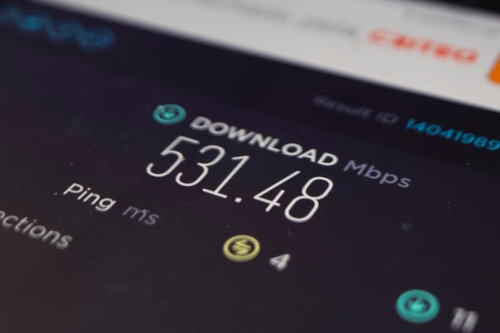
photo credit: Thiago Japyassu / Pexels
Key Takeaways
- Bandwidth optimization is essential for maintaining reliable communication in high-stakes operations.
- Network assessment and mapping help identify usage patterns, inefficiencies, and segmentation opportunities.
- Traffic prioritization and throttling ensure critical data is transmitted without delay.
- Technologies like WAN optimization, compression, and caching reduce congestion and improve performance.
- Continuous monitoring and strong network policies are necessary to sustain long-term efficiency.
Michael Henry is a former US Army communications officer and Department of Defense technical director who now serves as CEO of Industrial Communications Group in Virginia Beach, Virginia. With nearly three decades of military service and 16 years at the DOD, Michael Henry developed deep expertise in global communications systems, tactical network deployment, and data integration across complex environments. His work included supporting Special Operations Command and leading initiatives that transitioned emerging technologies into broader military use. In his current role, he focuses on delivering integrated communications solutions for challenging and congested environments.
His experience aligns closely with bandwidth optimization practices, where efficient data management, prioritization, and system performance are essential to maintaining reliable and effective communications.
Practical Bandwidth Optimization Strategies for High-Stakes Operations
One of the most important aspects of running an operation is resource management. In military operations, bandwidth is a critical resource. It makes the difference between a timely response and a delayed one.
Bandwidth is the maximum data transfer rate between two points on a network, say, a router and a computer. Bandwidth management, or optimization, helps reduce the amount of unnecessary data, thus leaving room for the transmission of critical data. It enhances network performance, boosts network security, improves user experience, and helps reduce costs. Without bandwidth management, network congestion ensues, impairing communication.
The first step to optimizing bandwidth is to perform a thorough assessment of network activities. This will give you a clear view of what you have to work with. It’ll also help you understand how various users, applications, and devices use available bandwidth. Look beyond obvious heavy users and at bandwidth usage during peak and off-peak hours.
Next, map out your network. In addition to revealing how devices communicate with each other, network mapping will also advise segmentation. Network segmentation divides a network into smaller, more manageable sub-networks. Segmentation can also enhance network security by isolating potential attack surfaces.
With the network segmented, it’s time to consider which devices, applications, or users are critical to the mission. This way, you can configure the network to prioritize data from specific users or devices for transmission, a process known as traffic shaping. A 911 emergency services company, for example, may prioritize incoming calls over, say, emails. Another solution is traffic throttling, where you restrict the amount of bandwidth available to particular devices, applications, or users.
Your network assessment may also uncover unnecessary data in the network. Redundant data prevents the timely transmission of critical data. Removing outdated information may help create space for important data.
A go-to solution for data redundancy is Wide Area Network (WAN) optimization. A WAN is a network spanning a large geographical area and connecting multiple local networks. WAN optimization enhances communication between network devices by reducing latency, congestion, and data loss.
WAN optimization methods include compression and local caching. Compression reduces the size of data to be transmitted over a network, helping reduce the bandwidth the data uses. Caching stores regularly used data closer to the user. Reference data on the hard drive eliminates the need to transfer the data over the network.
Another technique for relieving network burden is cloud computing. It outsources data-heavy functions to the cloud, relieving on-site devices and native applications from bandwidth overwhelm.
The network analysis may also reveal that the network slows during off-peak hours. Incoming data can cause congestion, disrupting outgoing transmission. Load balancing helps distribute traffic across devices and network paths, preventing congestion.
Bandwidth optimization isn’t a set-and-forget affair. In communication-heavy operations, data becomes redundant quickly. You need to get rid of them as soon as that happens. For that, you need to constantly monitor, assess, and optimize your network. Regularly check which users, applications, or devices are using up your bandwidth, which could use more, and which could use less.
The aforementioned bandwidth optimization methods are automated and may not always be sufficient. That’s why you need robust network usage policies. For example, you may specify the devices and modes of communication users should use to relay, say, critical data, and which to use for non-critical data.
In a typical business operation, bandwidth usage might not be a priority. In military operations, it is. Bandwidth optimization ensures personnel can access, process, and relay data promptly. It’s not a silver bullet, though. Sometimes, you’re under capacity and may require connection upgrades.
FAQs
What is bandwidth optimization and why is it important?
Bandwidth optimization is the process of managing network data flow to improve efficiency and performance. It is important because it ensures critical information is transmitted quickly and reduces network congestion.
How can organizations identify bandwidth issues?
Organizations can identify issues by conducting network assessments and analyzing usage patterns across devices and applications. Monitoring both peak and off-peak activity helps uncover hidden inefficiencies.
What is traffic shaping in network management?
Traffic shaping is the practice of prioritizing certain types of data or users to ensure critical information is delivered first. It helps maintain performance during high-demand periods.
How does WAN optimization improve network performance?
WAN optimization reduces latency, data loss, and congestion through techniques like compression and caching. This improves communication speed across geographically distributed networks.
Why is continuous monitoring necessary for bandwidth management?
Continuous monitoring helps detect changes in data usage and prevents performance degradation over time. It also allows organizations to quickly adjust strategies as network demands evolve.
About Michael Henry
Michael Henry is a former US Army communications officer and Department of Defense technical director with extensive experience in global communications systems. He served 29 years in the military and later led complex integration and technology initiatives at the DOD. As CEO of Industrial Communications Group, he focuses on delivering communications solutions for challenging environments. His background includes expertise in tactical communications, systems integration, and leadership in high-pressure operational settings.