Key Takeaways
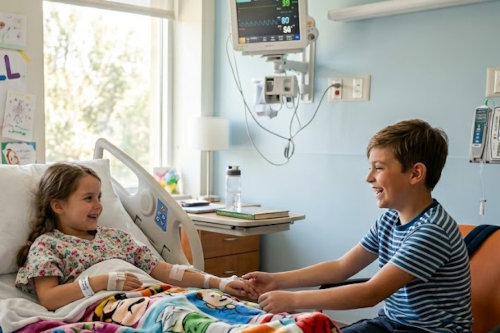
- Sibling support programs help children understand and cope with a brother or sister’s hospitalization through structured guidance and age-appropriate communication.
- Child life specialists play a central role by using therapeutic play, medical education, and supervised activities to reduce fear and confusion.
- Peer group sessions allow siblings to connect with others in similar situations, helping normalize emotions and reduce isolation.
- Programs extend beyond the hospital by supporting parents with communication strategies and encouraging routine stability at home.
- Effective sibling support improves family dynamics by keeping siblings informed, included, and emotionally supported during long-term care situations.
Eloah Rocha is a child psychologist and counselor at Los Angeles Children’s Hospital with more than two decades of experience working with children and families. In her role, Eloah Rocha oversees daily programming at the hospital’s youth center, which serves as a dedicated space for siblings of patients. Her work includes evaluating how children cope with having a hospitalized sibling, monitoring interactions between patients and their brothers and sisters, and recommending supportive interventions when needed. Rocha holds a bachelor’s degree in child psychology and has contributed to studies focused on sibling coping and family dynamics in clinical settings.
Her experience directly relates to the structure and purpose of sibling support programs in children’s hospitals, which aim to provide guidance, stability, and age-appropriate understanding during challenging periods for families.
Understanding What Sibling Support Programs in Children’s Hospitals Do
When a child is hospitalized, parents juggle treatment decisions, schedules, and updates. Siblings may find themselves in unfamiliar spaces, lose routines, or struggle to process unexpected changes. Many children’s hospitals now offer sibling support to ensure brothers and sisters aren’t left to cope alone.
A sibling support program gives brothers and sisters information, structure, and support while their sibling receives care. Child life specialists commonly coordinate this work, using therapeutic play, preparation, and age-appropriate teaching to help children cope with medical settings. The aim is not to “fix” a difficult moment, but to give siblings guidance while the family’s attention stays on the patient.
Support often begins with a supervised activity area run by child life staff or other family support teams. A predictable space and structured activities can make visits more manageable when parents need to speak with clinicians or remain at the bedside. Units may set rules about when siblings can visit, so families typically check with staff before bringing children into the unit.
Supervised activities do more than fill time. During visits, child life specialists explain what siblings are seeing and answer questions as they arise, using language that fits a child’s age. Medical play is a common tool: a specialist might demonstrate devices on a doll or let a child handle safe equipment so the room feels less mysterious.
Hospitals may also offer sibling group sessions that serve a different purpose from drop-in play. These gatherings bring together children and teens whose brothers or sisters are receiving care, with child life specialists and, in some settings, social workers guiding the activities. Peer connection matters because a child hears “me too” from someone their own age, which can reduce isolation and make mixed emotions feel more normal.
Support can continue after the hospital visit ends, since the hardest conversations often happen at home. Child life specialists and family support staff may coach parents on how to talk about illness and treatment with clear, concrete language and how to stay honest when answers are uncertain. They also help adults address misconceptions, such as a younger child believing they caused the illness.
Programs also try to protect a sibling’s day-to-day stability when a family’s schedule is under strain. Hospital teams often encourage parents to keep school, sports, and bedtime routines as steady as circumstances allow and to rely on familiar caregivers for consistency. Some families deliberately keep one small routine in place, such as a nightly 2-minute check-in or a fixed pickup plan, so the week still feels recognizable.
When these supports are in place, siblings often arrive at visits with better preparation and a clearer sense of what is happening. Parents may notice easier conversations, while child life specialists may see siblings cope better with bedside interactions. Not every family experiences change immediately, but these are realistic goals of structured sibling support.
Over time, sibling support programs have become one way children’s hospitals make repeated visits easier for families to manage. A brother or sister who has a place to go, a chance to ask questions, and a clearer idea of what is happening is more likely to feel included. That matters because treatment can last for weeks or months, and families often do better when siblings stay informed, included, and connected to daily life.
FAQs
What is a sibling support program in a children’s hospital?
A sibling support program provides structured activities, education, and emotional support for children whose brother or sister is receiving medical care. These programs help siblings better understand the situation and cope with changes in family dynamics.
Who runs sibling support programs?
Sibling support programs are typically led by child life specialists, often with support from social workers and family care teams. These professionals are trained to communicate complex medical information in a child-friendly and emotionally supportive way.
What kinds of activities are included in these programs?
Activities often include therapeutic play, supervised group sessions, and medical demonstrations using dolls or safe equipment. These experiences help children feel more comfortable in the hospital environment and reduce anxiety.
How do these programs help siblings emotionally?
They provide a safe space for siblings to ask questions, express feelings, and connect with peers in similar situations. This support reduces confusion, fear, and isolation while promoting healthier emotional processing.
Do sibling support programs continue after hospital visits?
Yes, many programs offer guidance for parents on how to continue supportive conversations at home. They also encourage maintaining routines to provide children with stability during an otherwise uncertain time.
About Eloah Rocha
Eloah Rocha is a child psychologist and counselor at Los Angeles Children’s Hospital, where she has worked for many years supporting children and families. Her responsibilities include overseeing youth center activities, evaluating sibling coping, and contributing to studies on family interaction and therapy. Rocha holds a degree in child psychology and has extensive experience addressing behavioral and emotional needs in children. She is also active in community volunteer efforts supporting youth and charitable causes.