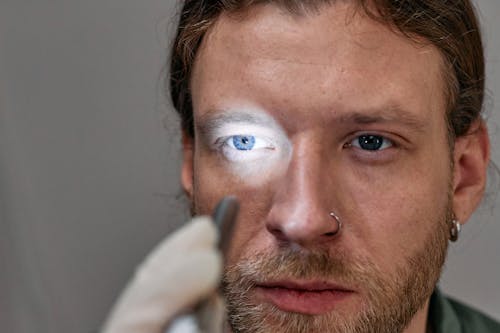
Shenae Whitehead: Psychological Assessment Evaluations in Military Service

Psychological assessment

Key Takeaways

  • Psychological assessments are critical to military eligibility, placement, and readiness.
  • Evaluations measure cognition, personality, stress tolerance, and mental health status.
  • Assessment results help match candidates to appropriate military roles and training paths.
  • Mental resilience testing supports performance and reduces long-term psychological risk.
  • Ongoing assessments create benchmarks for monitoring changes during active duty.
Continue reading

John Chadima: Life-Saving Equipment Supporting First Responders

Firehouse Subs

photo credit: Forsaken Fotos / Wikimedia Commons / CC BY 2.0 – cropped

Key Takeaways

  • John Chadima is an Iowa-based business owner and former Firehouse Subs franchisee with a focus on community impact.
  • His restaurants helped direct customer donations to the Firehouse Subs Public Safety Foundation.
  • The foundation is best known for providing life-saving equipment to first responders.
  • Donations include rescue boats, ATVs, AEDs, DECON kits, and smoke alarms.
  • Local Firehouse Subs franchises have made significant contributions to emergency responders across the U.S.
Continue reading

Gareth Booth: Scenic Running Routes to Explore in Belfast

Running in the scenic Belfast route

Key Takeaways

  • Belfast offers a unique mix of urban landmarks, riverside paths, and nearby trail runs.
  • The River Lagan loop provides an accessible, scenic waterfront route through the city.
  • Stormont Estate combines historic surroundings with wide, tree-lined running paths.
  • Cave Hill Country Park delivers panoramic city views and a challenging uphill section.
  • Divis and Black Mountain trails suit experienced runners seeking elevation and open landscapes.
Continue reading

Dr. Boutros Mikhail: When Chest Pain Needs Urgent Evaluation

Chest pain

Key Takeaways

  • Chest pain that radiates to the arm, jaw, neck, or back should be treated as a medical emergency.
  • Symptoms lasting more than a few minutes or returning after rest need urgent evaluation.
  • Shortness of breath, sweating, nausea, or dizziness with chest pain increases risk.
  • Personal risk factors lower the threshold for choosing emergency care.
  • When in doubt, calling emergency services is safer than waiting or driving yourself.
Continue reading

Judge Megan Goldish: What Happens When AI Meets High Volume Courtrooms

AI uses in courtrooms

Key Takeaways

  • High-volume courtrooms are experimenting with AI for scheduling, intake, and document handling.
  • AI-generated filings can introduce serious risks, including citation errors and missing legal context.
  • Judges must retain control over prioritization, overrides, and final legal judgment.
  • Confidential records and sensitive filings require strict limits on AI access and usage.
  • Courts should evaluate AI using performance metrics tied to speed, accuracy, and fairness.
Continue reading

Brian Uridge: How Public Safety Agencies Review Medal of Valor Nominations

Key Takeaways

  • Medal of Valor awards are reserved for rare acts involving extraordinary bravery and extreme personal risk.
  • Departments use strict written criteria to prevent valor recognition from becoming routine.
  • Nominations usually move through a formal chain-of-command and committee review process.
  • Agencies distinguish between life-saving awards and valor awards to apply the correct standards.
  • Transparent criteria and consistent decisions help preserve public trust in the recognition system.
Continue reading

Timothy Mahoney: Building Resilience in Global Risk Management

Global risk management

Key Takeaways

  • Modern risk management depends more on organizational readiness than on perfect prediction.
  • Integrated data systems improve visibility across fragmented global risk environments.
  • Cyber, climate, and geopolitical risks now require board-level strategic ownership.
  • Resilient companies balance efficiency with redundancy in supply chains and operations.
  • Strong risk culture and leadership engagement are as important as formal frameworks.
Continue reading

Alexandra Forrestall: How Hikers Can Actively Protect Mountain Ecosystems

Hiking in the alps

Key Takeaways

  • Mountain ecosystems are fragile and recover slowly from human disturbance.
  • Staying on marked trails helps protect vegetation, soil structure, and surrounding habitats.
  • Proper waste management prevents pollution and ecological disruption in high-altitude environments.
  • Respecting wildlife distance preserves natural behaviors and reduces stress on sensitive species.
  • Education and conservation support extend individual impact into long-term ecosystem protection.
Continue reading

Zariq Siddiqui: How the ‘We Give Blood’ Campaign Expands Access to Life-Saving Donations

Blood donation

Key Takeaways

  • The “We Give Blood” campaign is a Big Ten–wide, Abbott-sponsored initiative that promotes blood donation through intercollegiate collaboration.
  • Universities act as organizing hubs, coordinating students, alumni, and communities with accredited blood collection partners.
  • Donations are verified, logged, and tracked publicly through leaderboards to encourage sustained participation.
  • Each donation is treated as potentially helping up to three people, making impact measurement central to the campaign.
  • In 2025, the campaign recorded over 83,000 donations and awarded a $1 million health grant to the winning university.
Continue reading

Ahmad Razaghi: How Accreditation and Licensure Support Tribal Hospitals

Patient and doctor in a tribal hospital

Key Takeaways

  • Accreditation and licensure are essential for ensuring quality, safety, and legal compliance in tribal hospitals.
  • Accreditation provides external validation that clinical and operational standards meet national benchmarks.
  • Licensure and credentialing ensure that only qualified healthcare professionals provide patient care.
  • These standards improve patient trust, reduce clinical risk, and strengthen organizational performance.
  • Accredited and licensed facilities are better positioned to access funding, reimbursement programs, and healthcare networks.
  • Strong governance and compliance systems support long-term sustainability for tribal health systems.
Continue reading