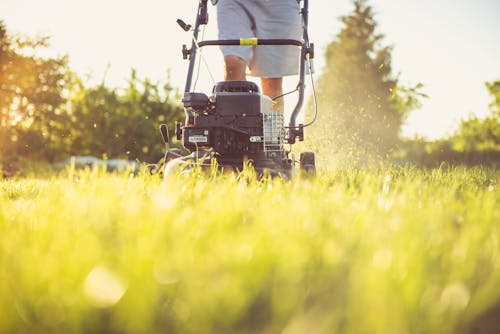
photo credit: Magic K / Pexels
Key Takeaways
- Healthy lawn maintenance starts with understanding soil conditions, grass types, and seasonal growth patterns.
- Proper mowing techniques, including sharp blades and the one-third rule, help grass stay strong and disease-resistant.
- Deep, consistent watering encourages stronger root systems and improves drought resilience.
- Balanced fertilization based on soil testing supports healthy growth and long-term lawn performance.
- Aeration, dethatching, and weed control help maintain airflow, moisture absorption, and overall turf health.
William D. Jones MD is a physician based in Oklahoma City, Oklahoma, with more than two decades of experience in primary, occupational, and preventive medicine. Alongside his longstanding medical career, William D. Jones MD has maintained a strong interest in public health, environmental conditions, and practical approaches to everyday wellness and home care. He earned his medical degree from Brown University and completed his residency in family and preventive medicine at the University of Oklahoma, where he also obtained a master’s degree in public health. Since establishing his independent practice in the mid-1990s, Dr. Jones has held several leadership and clinical roles in occupational medicine.
His practical and methodical approach to maintenance and prevention also aligns with topics such as lawn care, where consistent upkeep and attention to foundational conditions contribute to long-term health and performance.
A Beginner’s Guide to Lawn Maintenance
A well-maintained lawn is not only visually appealing, it also provides a functional space for recreation. Maintaining healthy turf requires more than just occasional mowing to keep it looking nice. It begins with understanding different elements, including soil health, grass types, watering techniques, and mowing heights, among others.
Success begins with analyzing the ground conditions and grass species. Experts recommend that you submit a soil sample to a professional laboratory every three years to identify nutrient levels and other factors. The laboratory results will inform amendments such as balancing soil pH, a scale for measuring acidity and alkalinity. The data will also help you understand soil texture and how it retains and drains moisture.
Identifying the specific grass types that fit your lawn is equally important in helping determine your maintenance calendar. Cool-season grasses, such as fine fescue and Kentucky bluegrass, thrive in mild spring or autumn. Meanwhile, warm-season types like Bermuda grass or Zoysia grass do well during summer. Following these natural growth cycles ensures you provide the proper care when your lawn needs it most. Recognizing these biological cycles will help you align your efforts with the species’ natural growth periods.
Regular mowing keeps your yard neat and attractive. Importantly, never let your grass to grow too long, as it may harbor fungi and pests, while cutting it too short hinders its growth and affects photosynthesis. Your mowing equipment’s blades should be sharp, as blunt blades can tear the grass and make it susceptible to diseases and pests. In addition, dull blades result in a freshly cut lawn that can still appear uneven. You should sharpen your equipment blades at least once a year.
It’s also important to follow the one-third rule, which dictates the amount of grass to be cut. This rule dictates that you should never cut more than one-third of the grass blade height in a single cutting. This prevents scalping, which weakens roots and encourages weed growth. Leave the grass clippings on the surface, as they decompose and provide the soil with organic matter. They also act as a natural mulch that recycles nutrients to improve long-term health.
Regarding watering techniques, irrigation focuses on encouraging root systems that grow deeply into the soil, rather than staying close to the surface. A good lawn requires at least one inch of water, through rain or a sprinkler system. Water your lawn for long periods to ensure adequate penetration. This encourages the roots to go deep, helping the grass to remain resilient during times when there is little moisture.
Timing is also crucial. For example, watering your lawn in the morning gives the roots time to absorb enough moisture before the sun becomes hot and starts evaporating the water. Also, watering at night should be avoided, as it creates conditions that may attract mold.
Fertilization and nutrition are other factors to consider. Grass requires nitrogen for leafy growth, phosphorus for root health, and potassium for fighting diseases. Use your soil sample laboratory results to select a fertilizer that has an appropriate ratio of these three elements. Ideally, a slow-release formula provides a steady energy supply for weeks to come. Apply fertilizer to cool-season grasses in fall and optionally in spring. Mid-spring to summer fertilizer application is favored for warm-season grasses.
Manually removing weeds is most effective if you extract the entire root. However, if you can’t remove weeds manually, pre-emergent herbicides stop weeds from sprouting, while post-emergent products target already growing weeds. Additionally, thick grass naturally blocks the sunlight that various weeds need to germinate.
Finally, soil compaction and thatch buildup restrict the flow of water and air. Aeration involves removing small plugs of soil to loosen the ground to improve air flow and drainage. Dethatching removes organic material on the soil’s surface that can suffocate grass, and is recommended if it exceeds half an inch.
FAQs
Why is soil testing important for lawn maintenance?
Soil testing helps identify nutrient levels, pH balance, and moisture retention characteristics that affect lawn health. Understanding these conditions allows homeowners to apply the right fertilizers and soil amendments more effectively.
How often should grass be mowed?
Grass should be mowed regularly enough that no more than one-third of the blade height is removed at one time. Consistent mowing supports healthier growth and helps prevent stress on the lawn.
Why are sharp mower blades important?
Sharp mower blades create clean cuts that reduce stress and disease risk for grass. Dull blades tear the grass, leaving uneven surfaces and making the lawn more vulnerable to pests and fungal problems.
What is the best time of day to water a lawn?
Early morning is generally the best time to water because it allows moisture to soak into the soil before heat causes evaporation. Watering at night can leave excess moisture on the grass and increase the risk of mold or disease.
How much water does a lawn usually need?
Most lawns require about one inch of water per week from rainfall or irrigation combined. Deep watering encourages roots to grow further into the soil, improving resilience during dry periods.
What is lawn aeration and why does it matter?
Aeration involves removing small plugs of soil to improve airflow, drainage, and nutrient absorption in compacted ground. This process helps roots grow more effectively and supports stronger turf development over time.
About William D. Jones MD
William D. Jones MD is an Oklahoma City physician with extensive experience in primary, occupational, and preventive medicine. He earned his medical degree from Brown University and completed a residency in family and preventive medicine at the University of Oklahoma, where he also received a master’s degree in public health. Dr. Jones has operated an independent medical practice since the 1990s and has served in leadership roles at Norman Regional Hospital and several occupational medicine organizations in Oklahoma.