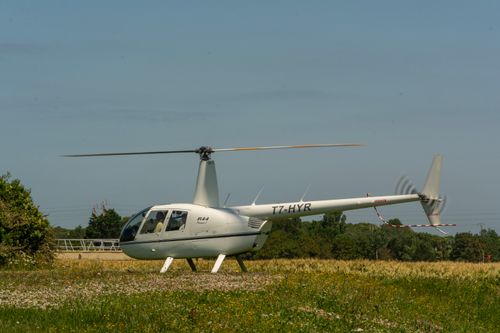
photo credit: Jan Van Der Wolf / Pexels
Key Takeaways
- Safe helicopter landings begin with a thorough assessment of the touchdown area, approach and departure paths, surrounding obstacles, and available clearance.
- Pilots must consider the helicopter’s dimensions, rotor system, landing gear, and performance rather than judging a landing site by the size of the visible touchdown area alone.
- Wind, terrain, surface conditions, and nearby structures can significantly affect approach, hovering, takeoff, and climb performance.
- People and loose objects around a landing site can create serious hazards because rotor wash can move debris and spinning rotors leave limited room for movement.
- Landing decisions should be reassessed throughout the approach so pilots can wait, reposition, go around, or select another site when conditions change.
As a licensed pilot of both airplanes and helicopters, Grace Borsari brings firsthand aviation experience to her work as a Bellingham, Washington entrepreneur and philanthropist. She founded Altair Advanced Industries, Inc., a company that supplied backup power systems for the cable television and broadband industries, growing the business from a handful of employees into a global operation before selling the company. Grace Borsari holds instrument certification and commercial ratings, and she has piloted aircraft on business assignments across Europe and the United States, in addition to flying her own helicopter at regional airshows.
Originally from Bern, Switzerland, she also worked as a photographer and certified ski instructor earlier in her career. Today, she serves on the board of the Innovative Resource Center, supports renewable energy initiatives, and funds scholarships for women in technical fields, extending the same attention to detail she once applied to aviation and business leadership.
A small helicopter can use a modest landing area, but that does not make choosing a landing site simple. That flexibility can hide the work behind a landing, whether the flight ends at a private site, an airport facility, or another designated helicopter landing area.
A pilot must go through a mental checklist covering the whole operating space before treating the site as suitable.
The first check separates the touchdown point from the larger landing area. A touchdown and liftoff area, or TLOF, means the load-bearing place where the helicopter touches down or lifts off.
The larger plan also includes the final approach and takeoff area, or FATO, where the pilot completes the final approach and starts takeoff. A safety area and ground-maneuvering space are required to add clearance around that core.
Once the pilot identifies that boundary, size and fit become the next test. The area must match the design of the helicopter, its landing gear, and its rotor system, not just the patch under the skids.
Rotor blades and tail rotor clearance can make nearby objects unsafe even though the helicopter is relatively small.
The pilot also checks how the aircraft will enter and leave the site. An approach path means the clear route the helicopter follows while descending toward the landing area, and a departure path is the clear route it needs after takeoff.
The site must leave enough room to enter, maneuver, and climb away.
Obstacles can make that route unusable. Wires, trees, poles, fences, signs, buildings, parked vehicles, and uneven terrain can narrow the space around the aircraft.
The pilot must look beyond obvious objects because a hazard can sit outside the touchdown point and still affect the usable airspace. Clear approach, departure, and transitional surfaces protect more than the marked landing pad.
Winds can determine how the aircraft must approach the site. Wind direction and velocity affect hovering, takeoff, climb, and directional control, so a pilot checks wind indicators, gusts, nearby buildings, trees, terrain, and the chosen approach path.
A site that works in calm air may need a different plan when winds are funneled by the terrain, vegetation, or structures.
The ground surface adds another site check. Pavement, turf, soft soil, slope, drainage, wet ground, mud, dust, snow, and loose stones can affect how the aircraft settles and how much debris is stirred up.
A pilot looks for a surface that can support the helicopter and has minimal debris that would negatively affect the adjacent area. Dust, snow, or loose surface material can also reduce visibility during the hover or landing.
People near the site can quickly become a serious concern. Passengers, spectators, ramp attendants, and unauthorized people can enter the landing and takeoff area at the wrong moment.
The pilot needs control of the space around the aircraft because spinning rotors leave little room for casual movement, making briefings critical if people will be approaching or leaving while the rotors are turning.
Loose objects create a separate hazard. Rotor wash means the strong air the spinning rotor system pushes down and outward. Hats, bags, tools, gravel, paper, signs, and unsecured equipment can be blown away.
Flying debris can injure people, damage aircraft or property, reduce visibility, or reach the engine intake or rotor blades.
The final check continues during the approach. Wind can shift, people can move, dust can rise, or a route that looked adequate from farther away can lose its margin as the aircraft descends.
When one condition changes the site’s limits, the pilot may land, wait, reposition, go around, or use another location. Those choices keep the landing plan tied to current conditions instead of the first impression of the site.
FAQs
What should a pilot check before landing a small helicopter?
A pilot should assess the touchdown and liftoff area, surrounding safety area, approach and departure paths, obstacles, wind, surface conditions, and available clearance. The pilot should also consider people, loose objects, and any changes in conditions that could affect the landing.
What is a TLOF in helicopter operations?
TLOF stands for touchdown and liftoff area, which is the load-bearing area where a helicopter touches down or lifts off. It is only one part of the overall landing site that a pilot must evaluate before operating.
Why are obstacles such as wires and trees dangerous for helicopters?
Objects such as wires, trees, poles, buildings, and fences can interfere with approach, departure, maneuvering, or rotor clearance even when they are outside the immediate touchdown area. Pilots therefore need to evaluate the surrounding airspace rather than focusing only on the landing surface.
How does wind affect a helicopter landing?
Wind direction, velocity, and gusts can influence hovering, directional control, takeoff, climb, and the safest approach path. Buildings, trees, terrain, and other structures can also alter airflow and create conditions that require a different landing plan.
Why is rotor wash a concern during helicopter landings?
Rotor wash is the powerful airflow produced by the helicopter’s spinning rotor system, which can move loose objects such as gravel, bags, tools, and debris. Flying debris can injure people, damage property or aircraft, reduce visibility, and create additional operational hazards.
About Grace Borsari
Grace Borsari is an entrepreneur, licensed pilot, and philanthropist based in Bellingham, Washington. She founded and led Altair Advanced Industries, Inc., a manufacturer of backup power systems for the broadband and cable television industries, before selling the company after several decades of growth. A native of Bern, Switzerland, she holds instrument and commercial pilot ratings and has flown aircraft on business assignments throughout Europe and the United States. She now supports renewable energy initiatives and scholarships for women in technical fields.