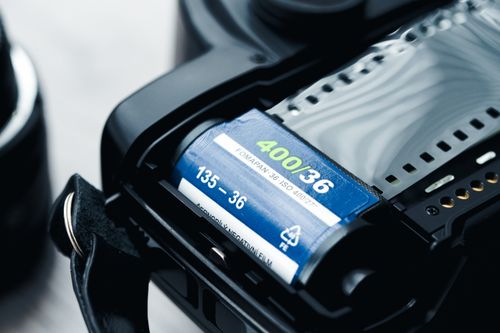
photo credit: Stanislav Kondratiev / Pexels
Key Takeaways
- Film photography offers a tangible connection to memories while providing a distinctive visual aesthetic that differs from digital photography.
- The limited number of exposures on a roll encourages photographers to plan carefully, develop technical skills, and make deliberate creative decisions.
- Film photography relies on light-sensitive materials and chemical development to transform an invisible latent image into a physical photograph.
- Photographers can choose from different formats and film types, including 35mm, medium format, large format, color negative, black-and-white, and slide film.
- Modern photographers can combine traditional film techniques with digital scanning and editing tools to preserve the character of film while benefiting from digital workflows.
Kemal Vukelj is a longtime New York City property manager whose career spans more than three decades of building operations, maintenance, and tenant relations, alongside a lifelong hobby in film photography. Currently a property manager with 6448 Realty Associates, he coordinates tenant and staff relations, oversees renovations, and has managed projects ranging from a building-wide sprinkler system installation to multi-floor office build-outs. He also serves as director of engineering and maintenance at Carnegie Hotel and Linen Service in the Bronx, where he oversees machinery and expansion planning for a facility serving major Manhattan luxury hotels. Earlier in his career, Mr. Vukelj worked with Fred Smith Plumbing and Heating and served as a resident manager on East 49th Street in Manhattan.
Away from work, he is an enthusiastic film photographer known for his 35mm black-and-white images, and he also enjoys soccer, basketball, and chess.
Film photography is a traditional practice that captures scenes on rolls or sheets of light-sensitive material. While modern devices like digital cameras and smartphones offer speed and convenience, film provides a physical link to memories that digital files lack, creating a tangible record through physical prints created from negatives.
Those who value this type of photography often choose it due to its specific and unique visual appeal and the technical expertise it requires. Its aesthetic advantages include organic color transitions and a greater sense of depth. Furthermore, the physical presence of grain and other apparent imperfections provides a quality that digital filters cannot duplicate.
Notably, the film photographer doesn’t have an immediate preview as with digital equipment, forcing them to develop technical proficiency. Individuals must carefully consider every setting before they commit to taking a shot. Consequently, the process becomes an activity that closely connects the artist to the craft.
Aside from enhancing an individual’s technical skills, film photography fosters discipline and critical thinking. In every roll of film there are a limited number of shots. This forces the photographer to master the use of their camera and make informed decisions before taking a shot.
This craft relies on a chemical reaction between light and light-sensitive materials. Camera film consists of a plastic base coated in gelatin, holding silver halide crystals.
When the camera shutter opens, light strikes these crystals, forming a hidden latent image. This invisible impression stays on the film until chemical development reveals it. The camera acts as a light-tight box, protecting the sensitive emulsion, while its lens and shutter work together to control how and how much light enters.
Several formats and media types exist. A specific choice will depend on a person’s goals.
The 35mm format is the standard entry point due to its wide availability and ease of use. Medium and large formats are ideal for those seeking extremely high resolution, as they offer more surface area for detail. Medium format film uses 120 or 220 rolls in sizes ranging from 6cm by 4.5cm to 6cm by 17cm. Large format includes sheet film as large as 11 by 17 inches.
Photographers choose between color negatives, black-and-white, or slide film. Black and white is relatively easy to process, making it more “forgiving,” because it is less sensitive to technical errors or environmental changes. Color negative film follows the C-41 standard and is the most popular option. Slide film, also called positive film, offers vibrant saturation and is used for projecting images on a screen. Each type requires specific handling during development.
A successful exposure requires coordinating three variables that control how the light exposes the film: shutter speed, aperture, and ISO. The shutter speed determines how long the light hits the film. Fast speeds freeze motion while slow speeds enable exposures in dark settings.
The aperture manages the volume of light and influences the depth of field, the distance from the photographer that will be in sharp focus. A large opening creates a narrow depth of field, meaning areas in front of and beyond this range will not be sharp, while a small opening expands this range.
Lastly, ISO defines the film’s sensitivity to light. Films with high ISO ratings are more sensitive to light and are commonly used in low-light environments.
The final step is transforming the hidden latent image into a visible photograph. While many individuals have their negatives processed in professional laboratories, some build home darkrooms to manually process their film. Many photographers find this hands-on final stage to be the most rewarding part of the experience.
Modern workflows combine traditional chemistry with digital technology, specifically image scanning. Once they digitize the negatives, photographers can use software like Adobe Lightroom to make refinements to their work. They enjoy working on a negative and producing a photograph with organic texture while gaining the benefits digital technology has to offer.
FAQs
What is film photography?
Film photography is a traditional photographic process that records images on light-sensitive film rather than digital sensors. The exposed film is chemically developed to reveal the captured image and can then be printed or scanned for digital use.
Why do photographers still use film instead of digital cameras?
Many photographers appreciate film for its distinctive grain, organic tonal transitions, depth, and tangible physical nature. The absence of an immediate preview also encourages photographers to slow down, carefully consider each exposure, and develop greater technical discipline.
What are the main types of photographic film?
Common film choices include 35mm, medium format, and large format, with each offering different levels of detail and practical characteristics. Photographers can also choose between black-and-white, color negative, and slide film depending on their creative goals and development requirements.
What are the three main exposure settings in film photography?
Shutter speed, aperture, and ISO work together to determine how film is exposed to light. Shutter speed controls exposure time, aperture controls the amount of light and depth of field, and ISO indicates the film’s sensitivity to light.
Can film photographs be edited digitally?
Yes, photographers can have developed negatives scanned and then use digital editing software to refine their images. This hybrid workflow allows photographers to retain the organic qualities of film while taking advantage of modern digital tools.
About Kemal Vukelj
Kemal Vukelj is an experienced New Jersey-based property manager with more than three decades in building management, maintenance operations, and construction oversight. He currently manages residential and commercial properties for 6448 Realty Associates in New York City and serves as director of engineering and maintenance at Carnegie Hotel and Linen Service in the Bronx. Earlier in his career, he was a resident manager on East 49th Street in Manhattan, where he led a major façade restoration project. Outside of work, Kemal Vukelj is a devoted film photography enthusiast and enjoys soccer, basketball, and chess.